As an Amazon Associate, we earn from qualifying purchases. Some links on this site are affiliate links at no extra cost to you. Our recommendations are based on thorough research and editorial judgment.

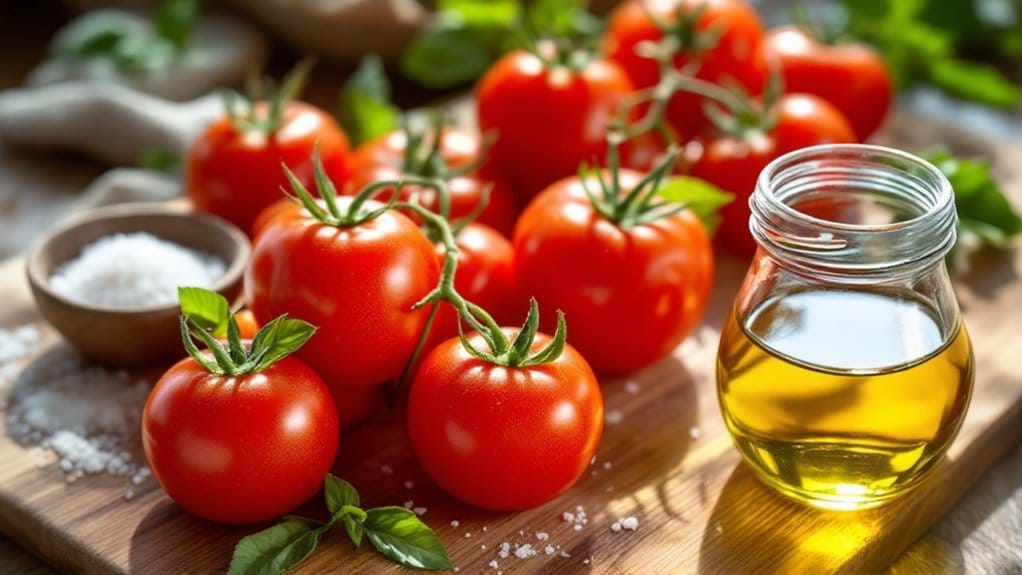
Why Tomatoes Stay Fresh With These Natural Methods

Tomatoes stay fresh longer with natural methods that enhance their flavor and quality! To maximize freshness, store them at room temperature, ideally between 55-70°F. You can also refrigerate ripe tomatoes at 44-50°F, storing them upside down to reduce moisture loss. Wrap them in paper towels for moisture control, or pop them in breathable cotton bags! Check for ripeness by looking for color changes, softness, weight, and aroma—like sniffing a summer garden! With these simple steps, you'll enjoy fresh tomatoes longer. Curious about more tips? There's plenty more to discover!
Key Takeaways
- Storing tomatoes stem-side down promotes even ripening and prevents bruising, enhancing their freshness and flavor.
- Wrapping tomatoes in paper towels absorbs excess moisture, reducing spoilage and prolonging shelf life.
- Refrigerating ripe tomatoes at optimal temperatures limits moisture loss and slows down mold growth, maintaining quality.
- Monitoring ripeness indicators like color, texture, and aroma ensures tomatoes are consumed at their peak freshness.
- Utilizing breathable bags and avoiding direct sunlight helps maintain airflow and prevents mushiness, keeping tomatoes fresher longer.
Optimal Room Temperature Storage
When it comes to preserving the fresh taste of tomatoes, understanding ideal room temperature storage is essential. You want to keep your tomatoes at the right temperature to enhance their flavor and support the ripening process. The best range for storage is between 55-70°F (13-21°C), but 65-85°F is even better. Room temperature storage allows tomatoes to ripen naturally and develop their full flavor potential.
Here are a few tips to help you out:
- Store at Room Temperature: Keep unripe tomatoes on a plate, stem side down. This encourages even ripening.
- Watch the Temperature: If your tomatoes become overly ripe, it's time to move them to a cooler spot.
- Avoid Direct Sunlight: Sunlight can turn your tomatoes mushy—yikes!
- Know Your Varieties: Cherry tomatoes and those with more pulp can handle cooler temps better than their fleshier cousins.
Recommended Products

Great for potted plants, gravel, potting and under grow bags

BUILT FOR CONTINUOUS USE: Constructed from 1.8-2.0mm thick polypropylene that resists cracking and warping season after season. Drastically reduce annual replacement costs and eliminate catastrophic mid-harvest tray failures.

Sunlike Spectrum: Emulates natural light, ideal for all stages of plant development from seeding to growth and bloom. Add red spectrum to promote photosynthesis.
Effective Refrigeration Techniques
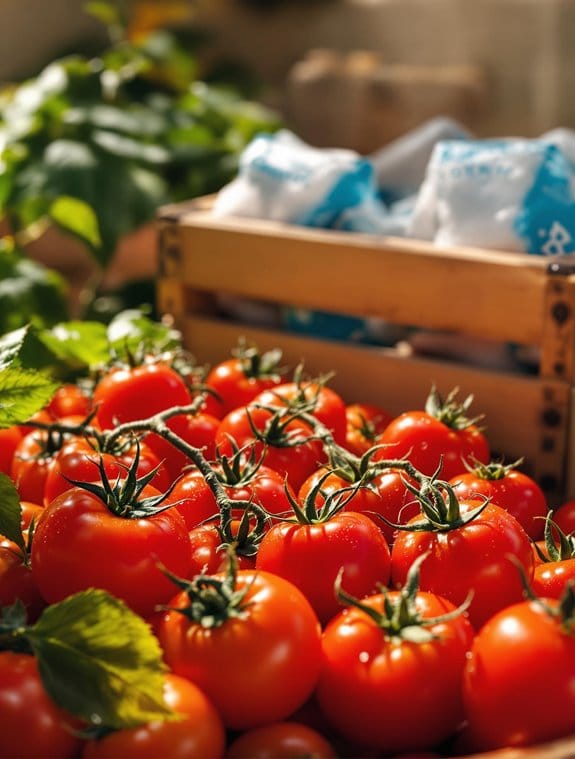
Storing tomatoes at room temperature is great for enhancing their flavor, but sometimes refrigeration is necessary to maintain freshness, especially for fully ripe ones. To keep your tomatoes in tip-top shape, focus on temperature control and moisture management. The ideal storage temperature for ripe tomatoes is between 44°F (7°C) and 50°F (10°C). Additionally, remember that refrigeration can halt the ripening process, allowing you to extend their shelf life when needed.
Here are some effective refrigeration techniques:
- Upside Down: Store ripe tomatoes upside down to reduce moisture loss and prevent mold. It's like giving them a little nap!
- Remove Stems: Always take off the stems before refrigerating. This helps in moisture management.
- Warm-Up Time: Allow refrigerated tomatoes to come to room temperature before serving. This step helps restore their flavor-producing enzymes.
- Limit Refrigeration: Don't keep them in the fridge for more than three days. Like a short vacation, it's just enough to keep them fresh!
Recommended Products

𝗗𝘂𝗿𝗮𝗯𝗶𝗹𝗶𝘁𝘆, 𝗮𝗲𝘀𝘁𝗵𝗲𝘁𝗶𝗰 𝗮𝗻𝗱 𝗦𝗺𝗲𝗹𝗹 𝗣𝗿𝗼𝗼𝗳: Our Food Storage Containers are not only designed to protect your precious contents but they’re also designed to withstand breaks and drops. These screw top jars are great for travel, sampling, and storage. The airtight container plastic lid creates a smell-proof barrier, making it perfect for storing seasonings and other odorous goods.

24-Piece Cookware Set Includes - 1.5QT Sauce Pan, 2.8QT Sauce Pan, 8 inch Frying Pan, 10 inch Frying Pan, 10 inch(4QT) Saute Pan, 10 inch Grill Pan, 12 inch Frying Pan, Removable Handle*3, 8 inch Glass Lid, 10 inch Glass Lid, 12 inch Glass Lid, Pot Protector*6, Fridge Storage Lid*2, Silicone Utensils Set*3

Vented berry basket is ideal for fruits & veggies. Inner dimensions 3.875"L x 3.875"W x 1.75"D, perfect for small berries: blackberries, raspberries, blueberries.
Innovative Wrapping Methods
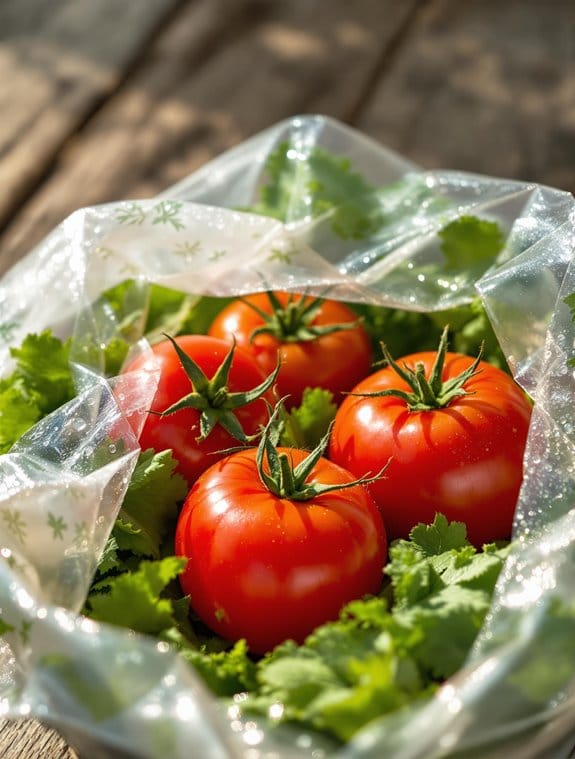
To keep your tomatoes fresh and flavorful, innovative wrapping methods can make a significant difference. Let's explore a couple of effective techniques that you can easily try at home!
- Paper Towel Wrapping: Start by wrapping each tomato in a clean white paper towel. Then, seal it with plastic wrap. This method absorbs excess moisture, which helps prevent spoilage. Plus, it slows the ripening process by keeping ethylene gas contained. Talk about a win-win! Additionally, it's important to remember that preserving tomatoes can be achieved through various methods.
- Breathable Bags: Consider using reusable cotton-woven net bags for storage. These bags let air circulate while controlling moisture levels. They're not just eco-friendly; they also help your tomatoes last longer. You'll be amazed at how much fresher they stay!
- Newspaper Wrapping: If you have newspaper handy, try wrapping each tomato without the stem. Place them upside down for a clever twist! This technique can slow down ripening for up to three days. It's a simple yet effective solution!
Recommended Products

FEEDS UP TO 6 MONTHS: Miracle-Gro Potting Mix is a gardening soil for outdoor containers that feeds all types of potted plants, including flowers, vegetables, shrubs, annuals, and perennials for up to 6 months

SURVIVAL ESSENTIAL: With 4320 servings of gourmet entrées & breakfast meals, READYWISE Buckets are the perfect starting point for anyone serious about preparing for the future. Stay ready for anything, from power outages to outdoor adventures!

PACK OF 500 Burlap Bags: These large burlap bags are great for planting & gardening as well as storing metal parts & hardware and much more! Each bag has a 50-pound weight capacity for long-term storage.
Best Countertop Storage Practices
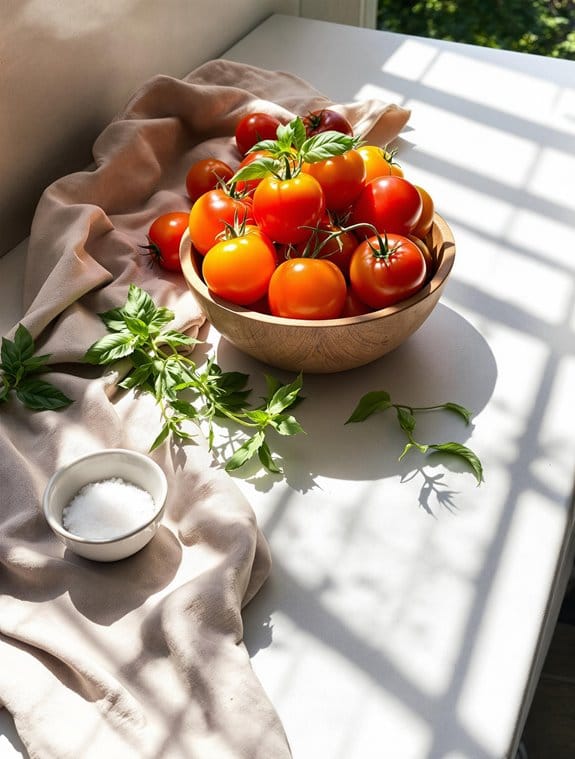
After exploring innovative wrapping methods for tomatoes, it's time to focus on the best countertop storage practices that can further enhance their freshness. You want to keep your tomatoes at room temperature, away from direct sunlight and heat sources like your stove. A well-vented area works wonders for moisture management!
Here are some simple tips to follow:
- Arrangement Matters: Store tomatoes stem-side down to minimize moisture buildup. Lay them in a single layer without touching each other to prevent spoiling.
- Prevent Moisture and Ethylene: Wrapping each tomato in newspaper or a paper towel can help absorb excess moisture and control ethylene gas. Avoid tight containers or plastic wraps that trap ethylene.
- Countertop Specifics: Use a plate or cutting board, keeping your tomatoes away from kitchen heat sources. If you have cherry or grape tomatoes, leave them in their original packaging or a breathable container. Additionally, whole tomatoes should be stored at room temperature to maintain their optimal flavor.
- Ripening Control: Want to speed up ripening? Place green tomatoes on a windowsill with indirect sunlight. For slower ripening, keep them in a cooler spot away from windows.
With these practices, your tomatoes will stay fresh and flavorful longer! Enjoy!
Recommended Products

PROPERLY SIZE FOR YOUR GARDEN: The size of GARDMAX silver raised garden bed is 8x4x2(ft)=96x48x24(inch). The GARDMAX galvanized raised garden bed planter can meet your outdoor planting needs, provide ample growing space to raise herbs, vegetables, fruits, flowers and small trees anywhere in your garden

Soft-sided fabric aeration container that has the rigidity to hold its shape

Innovative Watering System in Raised Garden Planter: A reliable and efficient solution for delivering water to your plants without having to worry about overflow. The water storage volume of the tomato planter box is about 9L, fill it once to water your planter for up to 1.5 months! This innovative design gives new gardeners a hassle-free way to start growing!
Long-Term Preservation Strategies
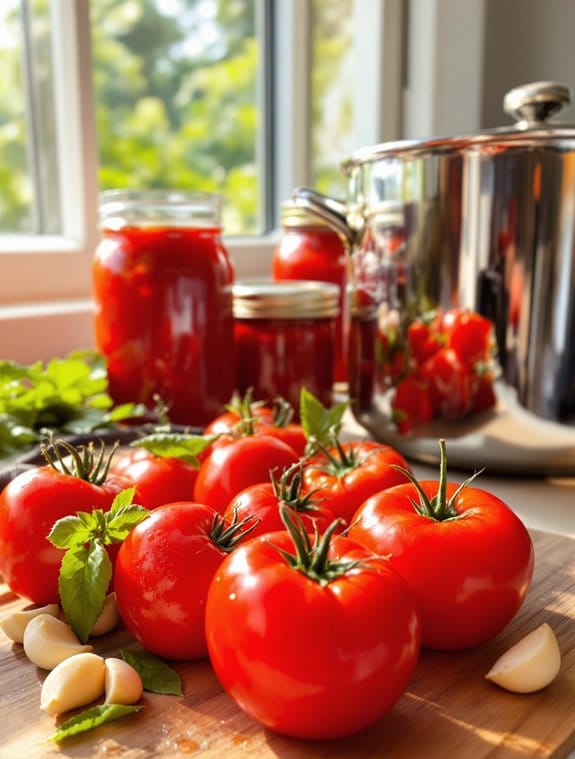
When it comes to preserving the vibrant flavor of fresh tomatoes, several effective methods can help you enjoy their taste long after harvest. Two popular long-term preservation strategies are canning techniques and freezing strategies.
Canning Techniques:
- Start by removing the skins for better texture.
- Cook down your tomatoes with salt and herbs to create a delicious sauce.
- Use new jars to guarantee a proper vacuum seal. Store them in a cool, dark place, and you can enjoy your tomatoes for up to a year! Home-canned tomatoes can last up to a year.
Freezing Strategies:
- Chop or cook down your tomatoes before freezing. It makes them easier to use later.
- You can keep the skins on if you're short on time—no judgment here!
- Place your tomatoes in airtight containers or freezer bags. They can last 12 to 18 months in a chest freezer.
With these methods, you won't just save tomatoes; you'll save flavor! So, roll up your sleeves and start preserving! Your future self will thank you when you're enjoying that sweet summer taste in the middle of winter!
Recommended Products

ADVANCED DUAL PRESSURE & IH TECHNOLOGY – Master every grain with the ultimate versatility of Dual Pressure. Choose 2.1 Bar Ultra-High Pressure for tough grains or No-Pressure Induction Heating (IH) for delicate white and sushi rice. Our powerful IH system provides 360° even heating for faster cooking and perfect results every time.

Includes: Electric water bath canner + multi-cooker unit, Tempered glass lid, Steaming/canning jar rack, Recipe book

Automatically Extracts the Tomato Puree, separating it from the seeds and the skin - Fresh or Cooked
Essential Freshness Tips
Preserving the vibrant taste of fresh tomatoes doesn't stop at long-term methods like canning or freezing; it's also about keeping them fresh right after harvest. You want to guarantee your tomatoes shine, especially with all those delightful tomato varieties out there, each boasting unique flavor profiles!
Here are some essential freshness tips:
- Room Temperature: Store unripe tomatoes at room temperature. Refrigeration can ruin their natural flavor and texture.
- Dry Storage: Always make certain your tomatoes are completely dry before storing them. Moisture can lead to mold and excess moisture can promote mold growth.
- Stem-Side Down: Place tomatoes stem-side down to prevent moisture from entering the stem scar.
- Cool, Dark Place: Keep your tomatoes in a cool, dark spot to maintain their delightful taste.
- Keep Away from Ethylene Producers: Avoid storing tomatoes with apples or bananas as they emit ethylene gas that speeds up ripening.
When handling your tomatoes, be gentle! Bruising can spoil their wonderful flavor. If you cut a tomato, use reusable wraps and store it in the fridge to keep its taste intact. With these tips, you'll savor every bite of your fresh tomatoes! Enjoy!
Signs of Tomato Ripeness
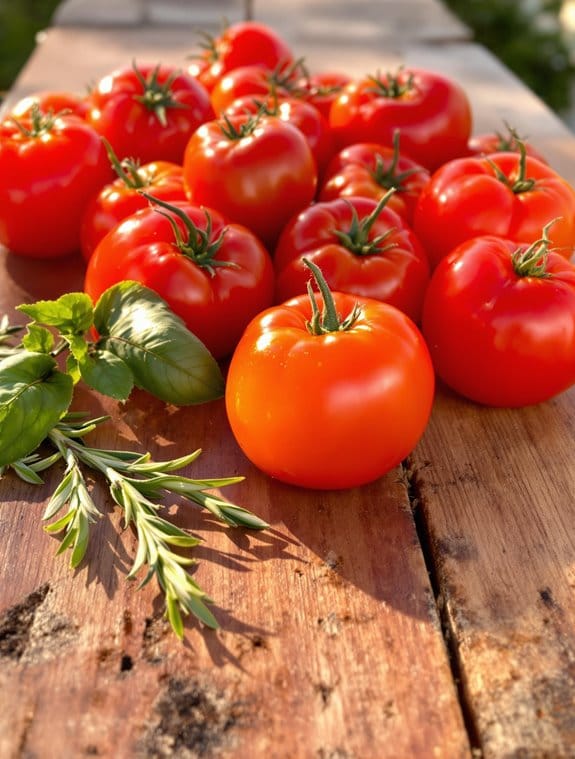
Knowing the signs of tomato ripeness is essential for ensuring you enjoy the best flavor and texture. Here are some key indicators to look for:
- Color Change: Ripe tomatoes shift from green to their specific color. However, they might keep green shoulders, which is perfectly normal!
- Softness: Gently squeeze the tomato. If it's soft but not mushy, it's ripe and ready to eat. Remember, a ripe tomato should feel both firm and supple to the touch.
- Weight: A ripe tomato feels heavier than an unripe one. So, if it feels like it could do some lifting, you've got a winner!
- Aroma Detection: Take a sniff! Ripe tomatoes have a delightful, garden-fresh aroma that's hard to resist. If it smells like summer, it's likely ripe!
- Stages of Ripening: Pay attention to the stages—like the "Breaker Stage" when color first appears. You can even pick them then, and they'll ripen off the vine.
Frequently Asked Questions
Can I Store Tomatoes With Other Fruits or Vegetables?
Storing tomatoes with other fruits can accelerate ripening due to tomato ethylene production; about 90% of fruits produce this gas. For best results, confirm your fruit storage compatibility keeps tomatoes separate to maintain freshness.
How Often Should I Check Tomatoes for Ripeness?
You should check your tomatoes for ripeness daily. This checking frequency lets you monitor tomato ripening, ensuring you catch the perfect moment. Look for color changes and slight softness to determine when they're ready to enjoy.
What Are Signs of Overripe Tomatoes?
When it comes to spotting overripe tomatoes, think of them as wilting flowers. Look for overripe indicators like soft, squishy tomato texture, foul odors, and unsightly mold. Trust your senses to identify the signs.
Can I Use Plastic Bags for Storage?
You shouldn't use plastic bags for storage, as they trap moisture retention and create a breeding ground for mold. Instead, opt for breathable materials to keep your tomatoes fresh and flavorful longer.
Does the Variety of Tomato Affect Storage Methods?
Isn't it amusing how heirloom varieties demand special treatment? You'll find their flavor profiles shine longer at ideal storage temperatures. Yes, the variety affects shelf life, but proper methods keep all tomatoes fresh!