As an Amazon Associate, we earn from qualifying purchases. Some links on this site are affiliate links at no extra cost to you. Our recommendations are based on thorough research and editorial judgment.


What Are Salt-Fermented Pickles? A Traditional Method

Salt-fermented pickles are a yummy, traditional treat! They're made by soaking cucumbers in a salty brine instead of vinegar. Here's how to get started:
- Choose cucumbers: Pickling or Kirby cucumbers work best, ideally 3-5 inches long.
- Mix your brine: Use fine sea salt at about 3-4.5% concentration. That's 1 tbsp of salt for every 4 cups of water!
After soaking your cucumbers for a few days, enjoy the crunchy, tangy goodness! And remember, if you keep 'em submerged in brine, they could last up to six months. There's even more to learn about this fun process!
Key Takeaways
- Salt-fermented pickles are cucumbers preserved in a salty brine without vinegar, relying on natural fermentation.
- Lactic acid bacteria convert sugars into lactic acid, acting as a preservative and enhancing health benefits.
- Ideal cucumbers for pickling are 3-5 inches long, preferably pickling or Kirby varieties, for optimal crunchiness.
- A salt-to-water ratio of 2% to 5% is crucial for successful fermentation and flavor enhancement.
- Proper storage and submersion techniques prevent spoilage, allowing pickles to last up to six months.
Definition of Salt-Fermented Pickles
Salt-fermented pickles are a delicious way to preserve cucumbers using a traditional fermentation method. This process involves submerging cucumbers in a salty brine, allowing natural bacteria to go to work. These beneficial bacteria convert sugars into lactic acid, which acts as a natural preservative. You won't find any vinegar here!
The health benefits of salt-fermented pickles are impressive. They promote the growth of probiotics, enzymes, and vitamins, which can boost your gut health and help digestion. Eating these tangy treats can be a fun way to include healthy bacteria in your diet. Additionally, the process of fermentation enhances the nutritional value of these pickles by increasing the bioavailability of nutrients.
Culturally, salt-fermented pickles hold significance in many kitchens around the world. They connect people to their culinary heritage and traditions, bringing a sense of nostalgia with each crunchy bite. You might find variations like full sour or half sour pickles, depending on how long they're fermented.
Essential Ingredients for Pickling
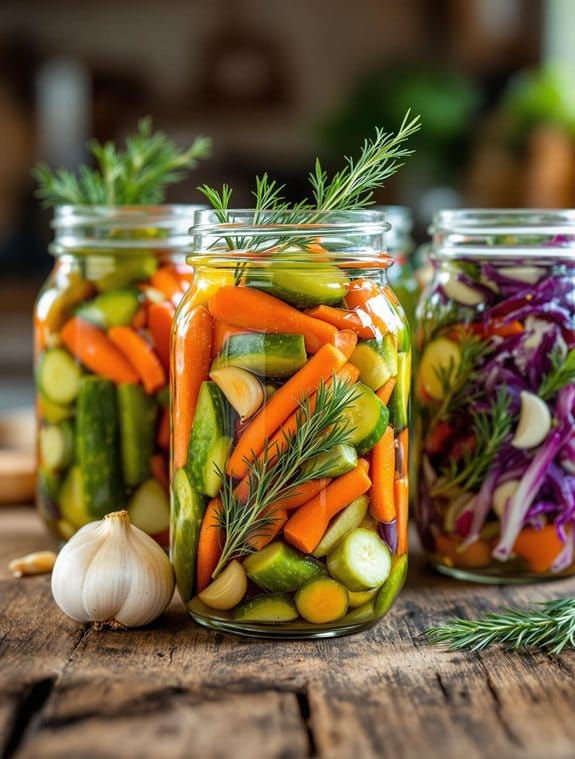
When it comes to making salt-fermented pickles, you'll need a few essential ingredients to guarantee the best flavor and texture. First and foremost, choose the right cucumber varieties. Go for pickling or Kirby cucumbers. They have lower water content, which means crunchier pickles. Stay away from larger slicing cucumbers unless you want mushy results!
Next, you'll need salt. Opt for fine sea salt, Himalayan Pink salt, or Celtic Sea Salt—just skip the iodized and table salts. The recommended salt-to-water ratio is key for your brine solution:
- For a 2% brine, use 1 tablespoon of salt per 4 cups of non-chlorinated water.
- A 3% brine calls for 7 grams of salt per cup of water.
- If you're feeling adventurous, try a 4.5% brine with 10.8 grams of salt per cup.
Don't forget filtered, non-chlorinated water! Using a brine solution with the right salt concentration adds flavor and helps create the perfect environment for beneficial bacteria to thrive. Add in fresh dill, garlic cloves (1-20, depending on taste), and your favorite spices like mustard seeds or black peppercorns. Optional extras like vinegar or grape leaves can enhance flavor and crunch. Happy pickling!
Recommended Products

Perfect Gift for Foodie

Pack of Twelve, 23-Ounce Cans (Total 276 oz)

Pack of Twelve, 23-Ounce Cans (Total 276 oz)
Steps for Preparing Pickles
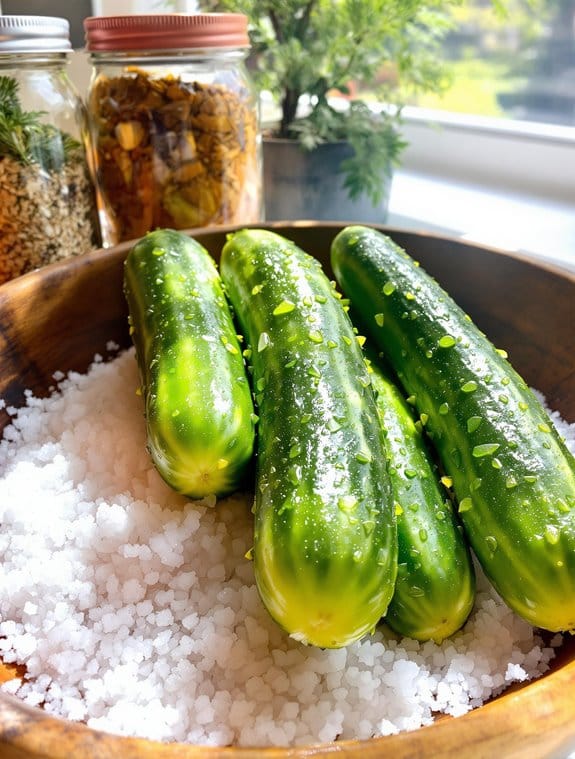
Preparing your cucumbers properly is essential for achieving that perfect crunch in your salt-fermented pickles. Start by washing your cucumbers thoroughly to get rid of dust and tiny insects. Don't forget to remove any wilted blossoms, as they can make your pickles soft!
Next, slice off 1/16 inch from the blossom end and soak your cucumbers in an ice bath for 15-30 minutes. This helps firm them up and removes enzymes that could ruin that crispness.
Now, let's assemble your pickle jar! Layer spices, garlic, dill, and bay leaves at the bottom. Pack the cucumbers tightly, avoiding air pockets. Pour the saltwater brine over the cucumbers, leaving about 1-2 inches of headspace. Use a weight to keep them submerged to prevent mold. It's important to use large granule sea salt for brining, as it avoids the issues caused by iodine in table salt.
Place your jar in a cool, dark spot, ideally between 60-75°F. Ferment for 3-14 days based on how sour you want them—try different pickle variations! After a week, burp the jar to release gases and taste a pickle. You can always get creative with flavoring, so don't hesitate to experiment! Happy pickling!
Recommended Products

The information below is per-pack only

PREMIUM STONEWARE MATERIAL: Crafted from durable, lead free stoneware for long lasting use. Ideal for traditional pickling and fermenting at home with a classic vintage look.

✔️ SUPERIOR QUALITY: TOMO Stoneware combines innovative design with traditional, quality craftsmanship. Make nourishing, probiotic rich foods like german sauerkraut, pickled vegetables, kombucha, and kimchi at home. Every detail was considered to develop this restaurant-grade fermenting and pickling crock. KIT INCLUDES: 2 weights and wooden tamper.
Understanding Brine Ratios
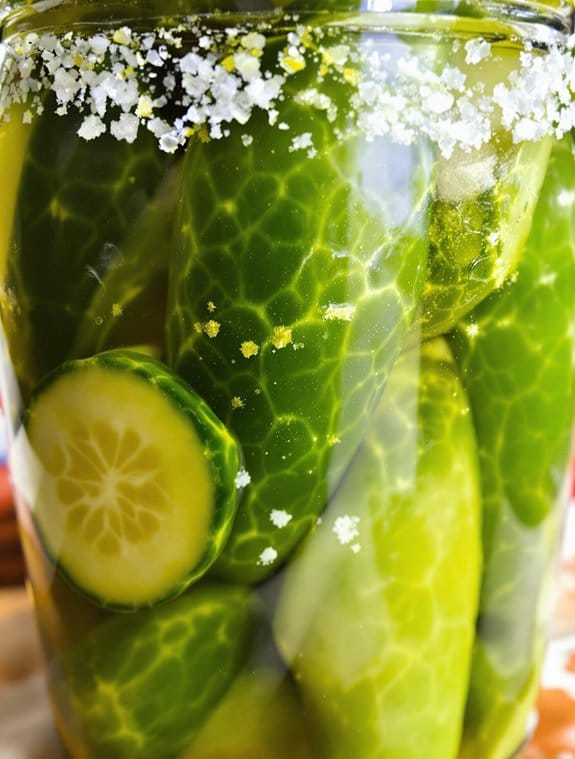
How do brine ratios impact the fermentation of your pickles? Understanding brine ratios is essential for successful fermentation! A general guideline suggests using a 2% to 5% salt-to-water ratio. If you go below 2%, you're risking spoilage; above 5%, you might inhibit fermentation.
Here's how to calculate the right amount of salt based on the weight of your veggies and water:
- For 1 liter of water: Add 15 milliliters (or 17 grams) of salt for a 1.8% brine.
- For 4 cups of water: Use 2 tablespoons of salt, giving you a 3.5% brine solution.
Salt plays a fundamental role in your brine types! It encourages healthy lactic acid bacteria while keeping harmful bacteria at bay. Recommended salt ratios typically range from 2% to 5%, ensuring optimal fermentation. Too little salt can invite trouble, while too much can spoil your ferment.
When deciding on salt sources, remember to taste your brine before fermenting. This way, you can adjust to your liking! And if you're watching your sodium, try using a starter culture for a salt-free option. Happy fermenting!
Recommended Products

HIGH-QUALITY & FOOD GRADE: Lab Alley offers Sodium Chloride Crystal, FCC Grade, meeting the stringent standards outlined in the Food Chemicals Codex (FCC), ensuring its suitability for use in the food industry and guaranteeing high purity.

BALWOO Korean Earthenware Onggi. Korean Traditaional Clay Jar. Food Storage Fermentation Container. Original Korean Food Container for Kimchi, Grain, Rice and Sauce

HIGH-QUALITY & FOOD GRADE: Lab Alley offers Sodium Chloride Crystal, FCC Grade, meeting the stringent standards outlined in the Food Chemicals Codex (FCC), ensuring its suitability for use in the food industry and guaranteeing high purity.
The Fermentation Process
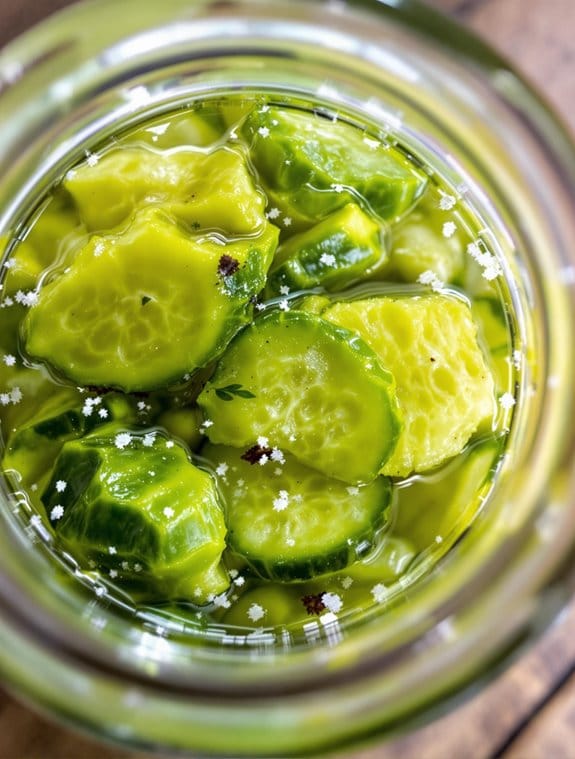
To achieve perfectly fermented pickles, it's crucial to understand the fermentation process that transforms your cucumbers into delightful tangy treats. The magic happens best between 64°F and 72°F (18°C – 22°C). This temperature range guarantees that lactic acid bacteria thrive, creating that yummy sour flavor we all love! Additionally, using pink Himalayan sea salt instead of iodized varieties enhances the fermentation process.
Now, let's talk about the fermentation timeline. For half-sour pickles, you'll want to let them ferment for about 3-5 days. This gives you that crisp, tangy taste. If you're craving full-sour pickles, let them go for 8-10 days. Trust me, your taste buds will thank you!
Here's a quick rundown of the process:
- Prepare: Trim about 1/16 inch off the cucumber ends to remove any unwanted molds.
- Wash: Clean your cucumbers gently, keeping their natural bacteria intact.
- Mix the Brine: Combine salt and water in ratios like 3% or 4.5%.
- Pack: Place cucumbers and spices in a jar, leaving some headspace.
- Cover: Use a loose lid so gases can escape.
Keep an eye out for bubbles and a cloudy brine—those are signs of active fermentation! Enjoy the journey!
Storage and Safety Guidelines
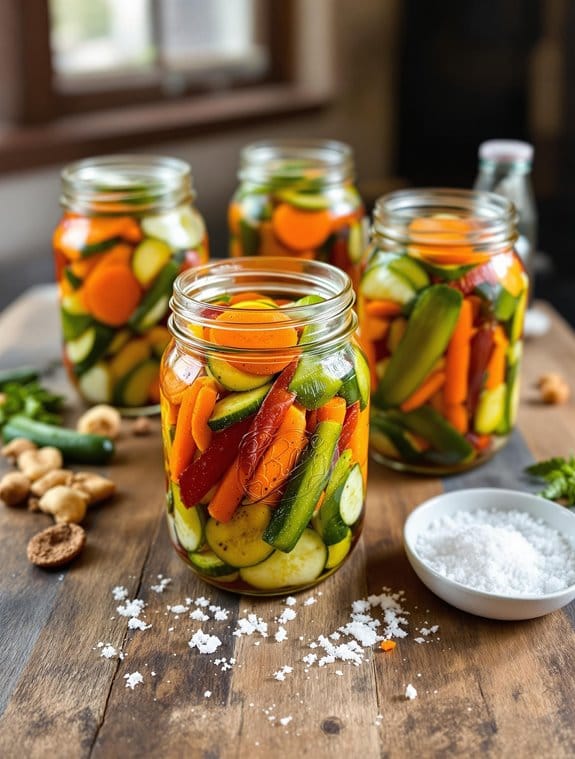
Storing your salt-fermented pickles properly is crucial for maintaining their flavor and safety. First, choose nonreactive storage containers, like glass jars, stainless steel, or food-grade plastic. These materials keep your pickles fresher for longer! Additionally, using sturdy containers ensures pickles remain fresh, crisp, and clean for an extended period.
To keep your pickles submerged in brine and prevent mold, use fermentation weights or even inverted plastic lids. It's a simple trick that makes a big difference! Always store your fermented pickles in the refrigerator. This slows down fermentation and helps keep them crisp.
Here are a few safety tips to remember:
- After 4-6 weeks of fermentation, move your pickles to a cool place to maintain quality.
- Regularly check for signs of spoilage—softness, sliminess, or unpleasant odors mean it's time to toss them.
- Never add fresh vegetables to your jars; this can throw off the salt and acid balance, leading to spoilage!
For long-term storage, fermented pickles can last in the fridge for up to six months. Just confirm the brine covers the pickles to keep them safe and tasty. Enjoy those crunchy delights!
Recommended Products

Sealed Lid Style - Lid covers full top of Crock; there is no water channel Can be used for Fermenting and Preserving
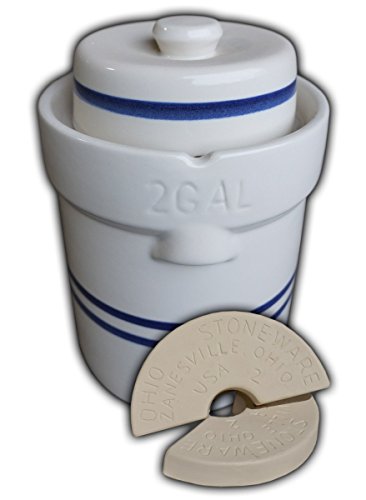
Lead Free, No Lead, Food safe Crock

BRINE CURED, NATURALLY FERMENTED GREEK OLIVES are made with saltwater brine, no vinegar, lyes, or sugar. These mixed olives are non-GMO, kosher, 100% plant-based, made with simple, whole-food ingredients. See product photos or description for all-natural ingredients.
Tips for Successful Fermentation
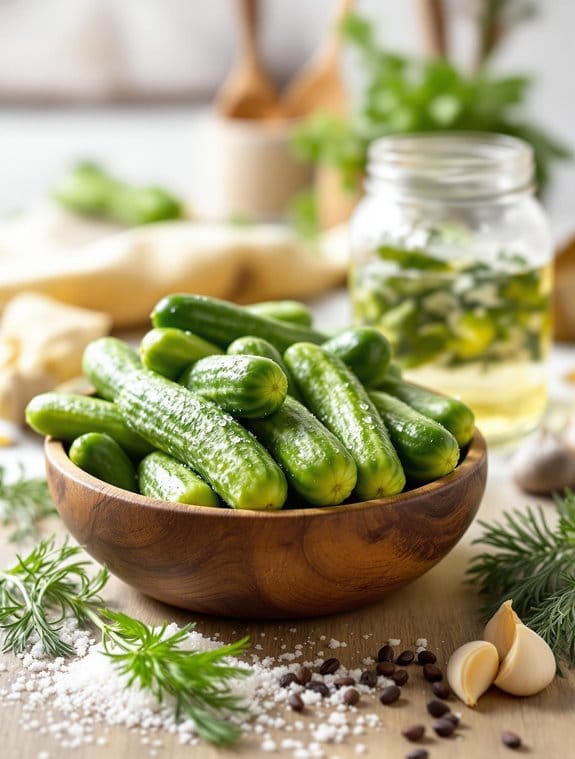
Successful fermentation hinges on a few key factors, so choosing the right cucumbers is essential. Look for firm, crisp cucumbers that are about 3-5 inches long. Avoid any with soft spots, as they won't yield the best flavor profiles!
Next, pick the right salt. Use unrefined sea salts like Celtic Sea Salt or Redmond's Real Salt. Steer clear of kosher and table salts, as they can ruin your brine. Speaking of brine, a 3% salt brine works well for short ferments (3-5 days), while a 4.5% brine is better for longer ones (14-21 days). Fermented pickles are made using a natural saltwater brine, which enhances flavor and preserves the food.
When preparing, follow these steps:
- Clean your cucumbers and remove the flower ends.
- Dissolve your chosen salt in filtered water.
- Layer cucumbers, garlic, and dill in clean fermentation vessels, leaving 1-2 inches of headspace.
- Use weights or grape leaves to keep everything submerged!
Recommended Products

5 Liter fermentation pot with water channel or gutter Oxygen and mold free environment for natural lactic acid fermentation

Complete Fermentation Kit – This 2.6-gallon ceramic crock comes with a dual-sided wooden stomper and fitted ceramic weights, providing everything you need to start fermenting sauerkraut, kimchi, pickles, and other delicious, homemade ferments
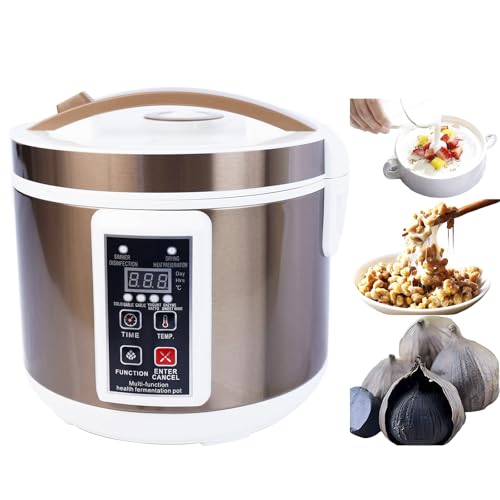
HIGH CAPACITY:The black garlic fermenter machine 6L large capacity can meet both home and commercial needs, Capacity of this fermentation pot is 6-8 LB fresh garlic (Lab data, the exact weight depends on the size of your garlic);
Frequently Asked Questions
Can I Use Other Vegetables for Salt Fermentation?
Absolutely, you can use creative vegetables for salt fermentation! Experiment with carrots, beets, or cabbage for exciting fermentation variations. Just guarantee they're firm and fresh to maintain that delightful crunch throughout the process.
How Can I Tell if My Pickles Are Over-Fermented?
If your pickles taste like a sour explosion, they're likely over-fermented. Look for fermentation signs like excessive cloudiness, softness, and mold. Balanced flavor profiles are key, so trust your taste buds to guide you!
What Should I Do if Mold Forms on My Pickles?
If mold forms on your pickles, remove affected areas immediately. Follow fermentation tips like using new brine and ensuring cleanliness. Monitor closely afterward to prevent further mold removal issues from arising during the process.
Can I Reuse the Brine for a Second Batch?
You shouldn't reuse the brine for a second batch. It compromises flavor enhancement and increases contamination risks. Fresh brine storage guarantees better fermentation, maintains crunch, and keeps your pickles delicious and safe to eat.
How Do I Adjust Fermentation for Different Climates?
To adjust fermentation for different climates, monitor temperature adjustments and humidity considerations closely. In warmer weather, fermentation speeds up, so check jars more often. Conversely, colder conditions may require longer fermentation times for ideal results.