As an Amazon Associate, we earn from qualifying purchases. Some links on this site are affiliate links at no extra cost to you. Our recommendations are based on thorough research and editorial judgment.

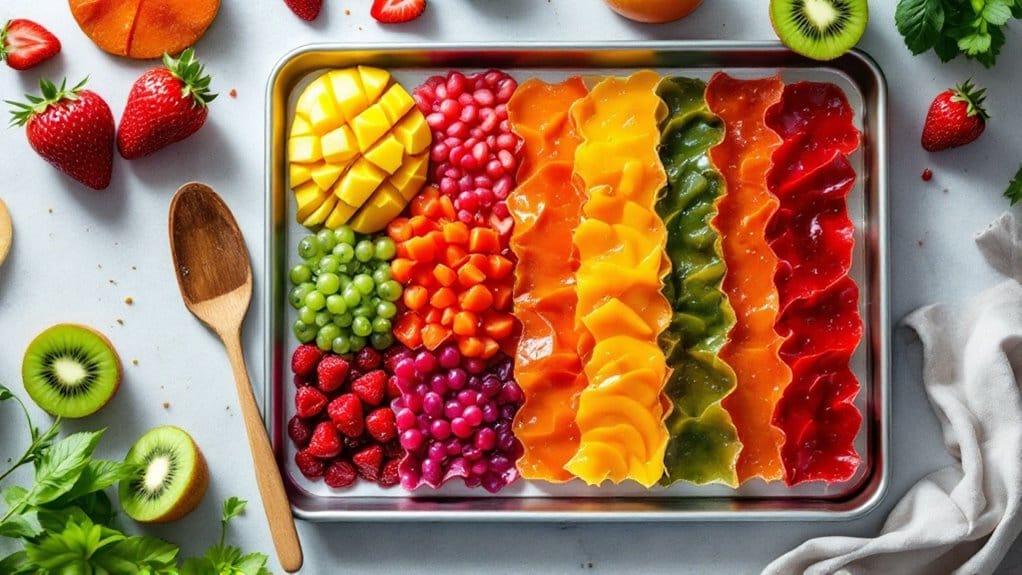
3 Simple Fruit Leather Tips For Dehydrator Success

To nail your fruit leather game, follow these three simple tips! First, choose ripe fruits for the best flavor—combine them like apple-blueberry magic! Next, make a smooth puree; aim for ⅛ to ¼ inch thickness when spreading on dehydrator trays. Finally, set your dehydrator between 135°F and 140°F, and keep an eye on it—drying typically takes 6-8 hours. Rotate those trays to avoid crispy edges and gooey centers, and you're golden! With these easy steps, you're on your way to tasty snacks. Keep exploring to discover even more tricks for perfecting your fruit leather!
Key Takeaways
- Choose ripe fruits for maximum flavor and texture, and combine different fruits for unique blends.
- Prepare a smooth puree, adjusting thickness with water or juice, and add lemon juice to light fruits to preserve color.
- Spread puree evenly at ⅛ to ¼ inch thickness on dehydrator trays to ensure consistent drying.
- Set the dehydrator temperature between 135°F and 140°F, and monitor drying time, typically 6-8 hours, for optimal results.
- Check for doneness by pressing the leather; it should hold an indentation without being gooey or crispy.
Choose the Right Fruits
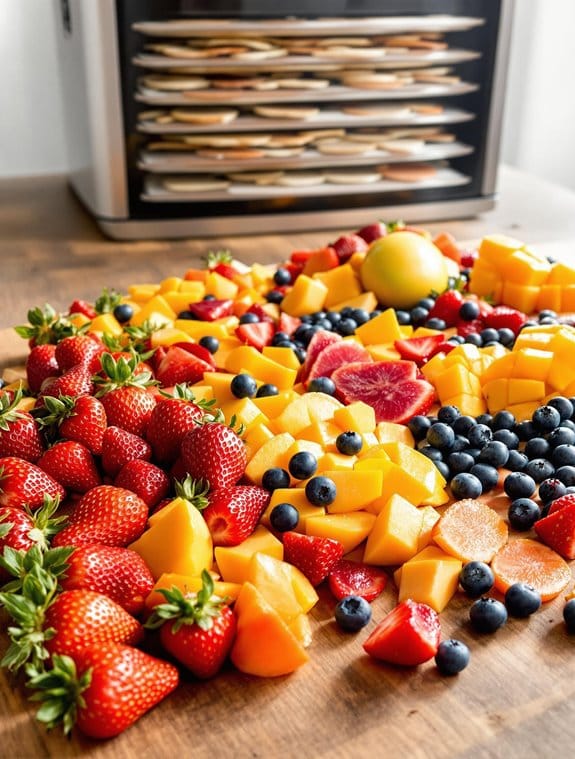
When you're aiming to make the best fruit leather, selecting the right fruits is essential for success. Start by focusing on ideal choices like apples, strawberries, or peaches. These fruits not only taste great but also have the right water content to help your leather set perfectly.
Here are some tips to help with your fruit selection:
- Choose Ripe Fruits: Pick fruits that are ripe or slightly overripe for the best flavor and texture. Trust me, it makes a difference!
- Mix and Match: Don't hesitate to combine fruits for unique flavor combinations. Think apple-blueberry or peach-raspberry—yum!
- Keep the Skins: Whenever possible, leave the skins on, as they provide extra fiber and nutrition. Just avoid it with bananas and pineapples.
- Minimal Sweeteners: Remember, fruits are naturally sweet! You might only need a splash of honey or maple syrup if you feel it's necessary.
With these tips in mind, you'll create delicious fruit leather that everyone will love! Happy dehydrating!
Perfect Your Puree
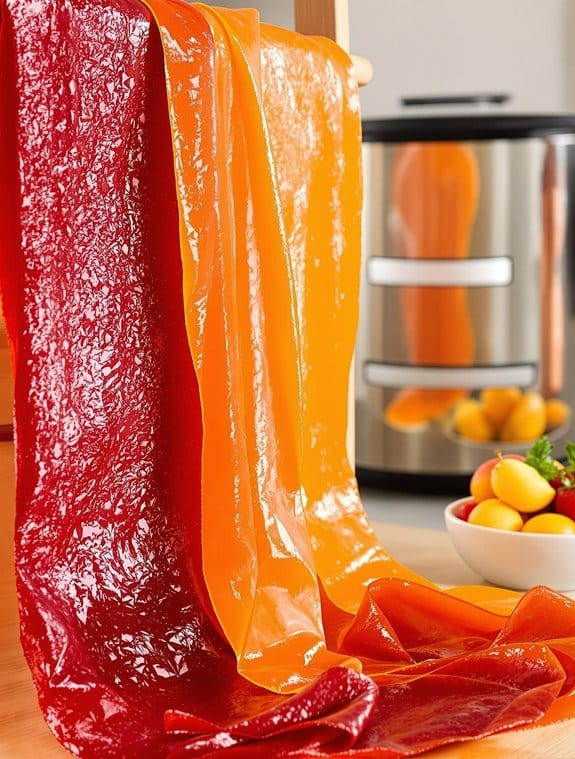
Perfecting your puree is essential for achieving delicious fruit leather. Start by choosing your fruits wisely! You can use fresh, canned, cooked, or even frozen fruit. Just remember to remove any large seeds and strain excess liquid, especially from juicy fruits like melons. Peeling tough-skinned fruits makes for a smoother texture too.
Aim for a smooth puree, but don't panic if you find a few small chunks! If it's too thick, add a splash of water or fruit juice. You can also reserve canned fruit juice for later adjustments. To keep light-colored fruits looking fresh, a dash of lemon juice works wonders. Sweeteners like honey or maple syrup can enhance the flavor, so feel free to experiment!
When spreading your puree, keep it about ¼ inch thick at the edges and ⅛ inch in the center. This helps it dry evenly—no one likes a crispy edge with a gooey center! For the best results, consider mixing high-water fruits, like watermelon, with drier options, like bananas.
Don't forget, any leftover puree can be stored in an airtight container for up to three days, or freeze it for later! Happy pureeing!
Recommended Products

【Automatic Food Straining, No Filter Needed】 ARINOO electric tomato strainer features a dual-channel design that automatically separates seeds and skins from the pulp, delivering smooth puree with no extra filtering required.
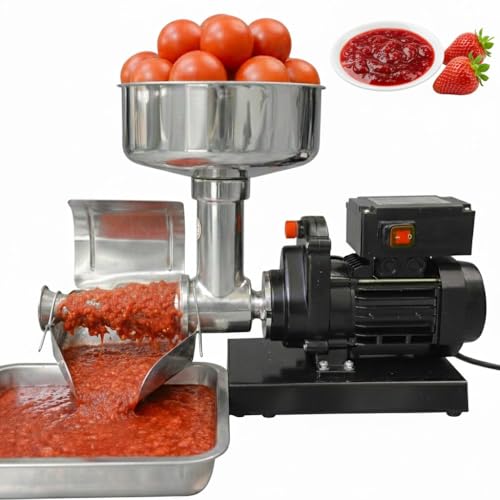
DURABLE STAINLESS STEEL CONSTRUCTION – Entire machine body is made of food-grade stainless steel, offering superior corrosion resistance, long-term durability, and easy cleanup after each use.

Designed, engineered, and tested by KitchenAid
Master Dehydrator Settings
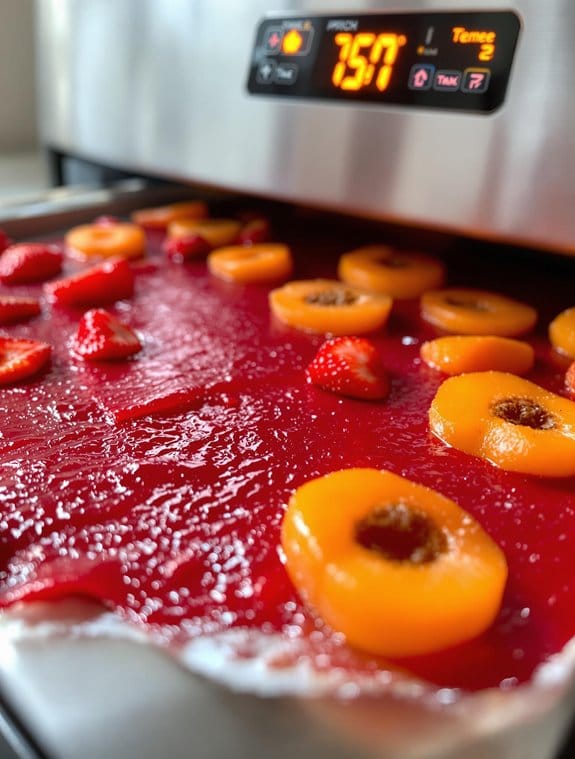
To master your dehydrator settings for fruit leather, start by setting the temperature between 135°F (57°C) and 140°F (60°C)—this range is ideal for best drying. Keeping your dehydrator well-maintained is essential, so verify it's clean and functioning properly before you start.
Next, spread your fruit puree about ⅛ to ¼ inch (2-5 mm) thick on lined trays. You can use paraflexx sheets, parchment paper, or silicone mats for easy removal. Humidity plays a big role in drying time; aim for low humidity to speed up the process. Generally, you'll need to dry your fruit leather for about 6-8 hours, but it could take longer in humid conditions.
As you check for dryness, press the leather with flat fingers. If it holds an indentation or shows dark, wet spots, it's not quite ready. Don't forget to rotate the trays from top to bottom during drying to guarantee even results.
Recommended Products

8-Tray Capacity: Equipped with 8 spacious stainless steel trays and a powerful 650W motor, this food dehydrator machine provides ample space to simultaneously dry beef jerky, apple chips, and garden herbs. Save time and energy by processing large batches in one go.

COMMERCIAL GRADE LARGE CAPACITY: Commercial design is especially suitable for businesses or households with a large amount of food to be made. 2 HANGING RACK FOR JERKY, 20 HOOKS can dehydrate a variety of vegetables, fruits, meats, flowers and other foods, and easily lock the minerals and vitamins in the food.
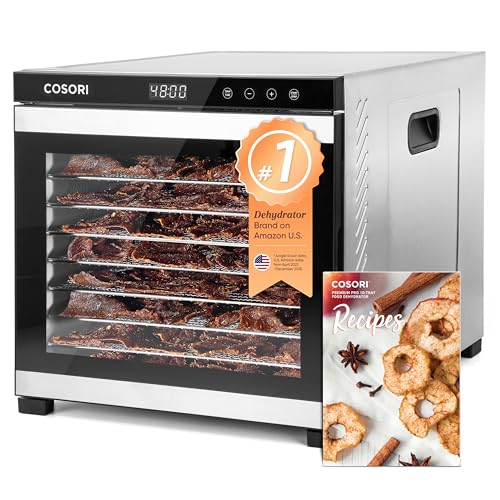
𝐌𝐎𝐑𝐄 𝐀𝐂𝐂𝐄𝐒𝐒𝐎𝐑𝐈𝐄𝐒: For additional Fruit Rolls or Mesh Screens, explore '𝘼𝙙𝙙 𝙖𝙣 𝘼𝙘𝙘𝙚𝙨𝙨𝙤𝙧𝙮' or search for '𝘾𝙊𝙎𝙊𝙍𝙄 𝘿𝙚𝙝𝙮𝙙𝙧𝙖𝙩𝙤𝙧 𝘼𝙘𝙘𝙚𝙨𝙨𝙤𝙧𝙞𝙚𝙨', or '𝘾𝙁𝘿-𝙈𝙎𝟭𝟬𝟮-𝙒𝙐𝙎', '𝘾𝙁𝘿-𝙁𝙍𝟭𝟬𝟮-𝙒?𝙎' to enhance your product experience
Frequently Asked Questions
Can I Use Dried Fruits to Make Fruit Leather?
You can't use dried fruits for fruit leather recipes. They lack moisture, leading to a brittle texture. Instead, opt for fresh or frozen fruits to enjoy the full benefits of flavor and nutrient retention.
How Should I Store Finished Fruit Leather?
You should store finished fruit leather in airtight storage containers. For ideal conditions, keep it in a cool, dark place at room temperature for up to a month, or refrigerate it for several months.
What Is the Shelf Life of Homemade Fruit Leather?
Think of your homemade fruit leather as a treasure; it lasts 1-2 months at room temperature. For longer enjoyment, choose ripe fruit selections and store them airtight—your vibrant flavors deserve to be savored!
Can I Add Spices to My Fruit Leather Recipes?
Yes, you can absolutely add spices to your fruit leather recipes! Spice combinations like cinnamon or cardamom can enhance flavors beautifully, making your fruit leather more exciting and delicious. Just remember to adjust to your taste!
Is It Safe to Leave Fruit Leather Out at Room Temperature?
Is leaving fruit leather out at room temperature really a good idea? For fruit safety, you shouldn't! While short-term storage's fine, guarantee proper dehydration first, or mold might ruin your tasty treat. Always prioritize safety!