As an Amazon Associate, we earn from qualifying purchases. Some links on this site are affiliate links at no extra cost to you. Our recommendations are based on thorough research and editorial judgment.

7 Best Ways To Dehydrate Mushrooms Successfully

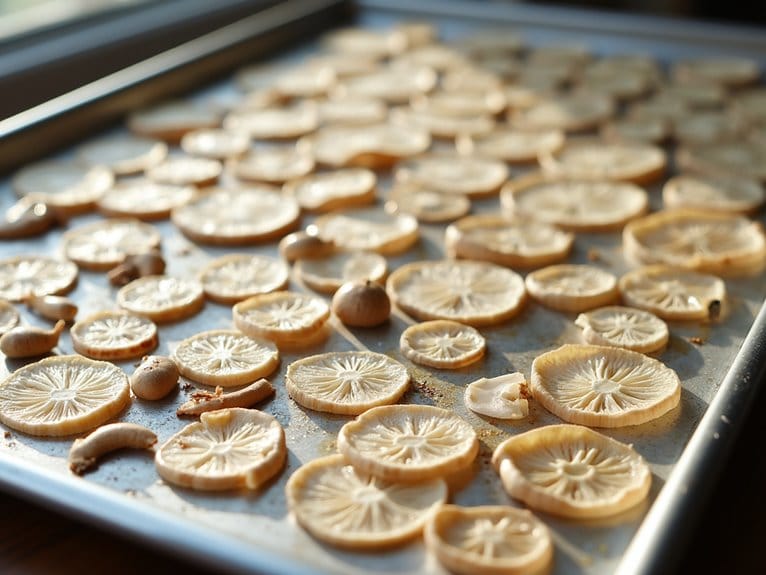
Successfully dehydrating mushrooms is simple with these seven proven methods! You've got options: use a food dehydrator (135-150°F), air dry in a ventilated space, oven dry at low temps (130-175°F), or try sun drying on warm days. Always slice mushrooms about 1/4-inch thick, arrange in single layers, and make certain they're completely dry before storing. They'll snap, not bend, when ready – and can last up to a year when properly dried. Let's explore each technique's secrets.
Key Takeaways
- Use a food dehydrator set between 135-150°F for consistent results, arranging sliced mushrooms in single layers for 6-10 hours.
- Air-dry mushrooms in a well-ventilated space with humidity below 55%, using mesh racks for 7-10 days until crisp.
- Oven-dry mushrooms at low temperatures (130-175°F) with the door slightly open for proper airflow and ventilation.
- Slice dense mushrooms like shiitake and porcini to 1/4-inch thickness for even drying across all methods.
- Test mushroom dryness by ensuring they snap cleanly rather than bend, then store in airtight containers for up to one year.
Understanding Different Mushroom Types for Optimal Drying
While drying mushrooms might seem straightforward, understanding how different varieties respond to dehydration is key to getting the best results. The moisture content in each type plays an essential role in determining your drying approach.
You'll find that denser mushrooms like shiitake and porcini need special attention. Make certain to slice these varieties about 1/4 inch thick – this will help you avoid those frustrating soft spots! Lighter mushrooms like chanterelles won't need as much time in your dehydrator.
Keep a close eye on delicate varieties like morels, as they'll dry much faster than their sturdier cousins. Don't worry if you notice your reishi mushrooms getting darker during the process – that's perfectly normal! Just verify they're completely dry and firm to the touch.
Recommended Products

【VARMBAKE 3 YEAR WARRANTY-TRUCK DELIVERY】 Providing you with professional after-sales support, commercial food dehydrator for jerky comes with a 3-year warranty.Please contact us in time if you encounter any problems

【9-STAGE PROGRAMMABLE INDUSTRIAL FOOD DEHYDRATOR】Truck delivery!!!This dehydrator machine freely set up to 9 drying stages with independent time&temperature for each (68-305°F, 5°F steps) & time (0.5H steps, up to 24H). Perfect for complex recipes

【VARMBAKE 3 YEAR WARRANTY-TRUCK DELIVERY】 Providing you with professional after-sales support, commercial food dehydrator for jerky comes with a 3-year warranty.Please contact us in time if you encounter any problems
Air Drying: The Traditional Method

Although modern dehydrators have their appeal, air drying remains one of the most reliable and budget-friendly ways to preserve your mushrooms! You'll need a well-ventilated space with humidity below 55% to properly dry your collection.
Air drying mushrooms is time-tested and cost-effective. Just find a spot with good airflow and low humidity to preserve nature's bounty.
Here's your straightforward guide to air drying fresh mushrooms:
- Clean mushrooms gently with a damp cloth – no washing under running water!
- Slice them into uniform 1/4-inch pieces for even drying
- Arrange slices in a single layer on a mesh rack or colander
- Check daily for 7-10 days until they snap rather than bend
- Store your dried treasures in airtight containers for up to 2 years
Remember to place your drying setup in a location with good air circulation. When done correctly, air drying preserves both the flavor and nutritional value of your mushrooms – all without using any electricity!
Recommended Products

STAINLESS STEEL DEHYDRATOR FOR HOME AND BUSINESS USE: This commercial-grade dehydrator features a 24-layer design and a powerful 1600W motor, all while operating quietly at under 50dB. Its sturdy stainless steel construction is easy to clean, with dishwasher-safe trays for added convenience

POWERFUL PERFORMANCE: This industrial dehydrator features 7.7inch big fans for 360° air-drying at 2500W power with a dual-plug 110V/60HZ system, offering flexible power options for both home and commercial use. More efficient drying of food while avoiding local scorching and saving electricity and time.

Big 8-Tray Load: Fill all eight stainless steel trays with turkey strips, mango slices, or sweet potato rounds. This food dehydrator turns a full farmer’s market haul into homemade jerky, dried fruit, and veggie chips in one session.
Dehydrator Techniques for Perfect Results
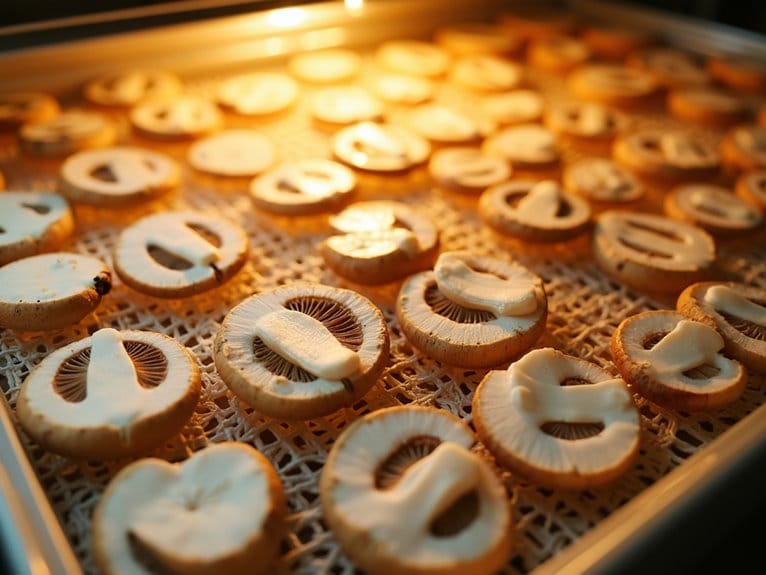
Modern food dehydrators take the guesswork out of drying mushrooms! When using a dehydrator, you'll want to set the temperature between 135°F and 150°F for ideal results. This range guarantees your mushrooms maintain their delicious flavor and texture.
To dehydrate mushrooms properly, slice them about 1/4-inch thick and arrange them in a single layer on your dehydrator trays. Don't let them overlap – this guarantees even drying and proper airflow. You'll need to check on them hourly, and the process typically takes 6 to 10 hours.
Once your fully dried mushrooms reach that perfect "cracker-dry" consistency, store them in airtight containers. Keep them in a cool, dark spot, and they'll stay fresh for up to a year! It's that simple to create your own pantry supply of dried mushrooms.
Recommended Products

SPACIOUS 30-LAYER DRYING - With a generous 30-layered food dehydrator machine measuring 15.7" x 14.9", our dehydrator provides an expansive drying space, perfect for jerky, meat, fruit, vegetables, and more.

ELECTRIC PRESERVER: Finally, a multi-tiered countertop electric food dehydrator that can preserve varieties of food! It produces nutritious food with very simple preparation. Prevent food to spoil and go to waste with the new NutriChef food preserver

8-Tray Capacity: Equipped with 8 spacious stainless steel trays and a powerful 650W motor, this food dehydrator machine provides ample space to simultaneously dry beef jerky, apple chips, and garden herbs. Save time and energy by processing large batches in one go.
Oven-Drying Methods and Temperature Control
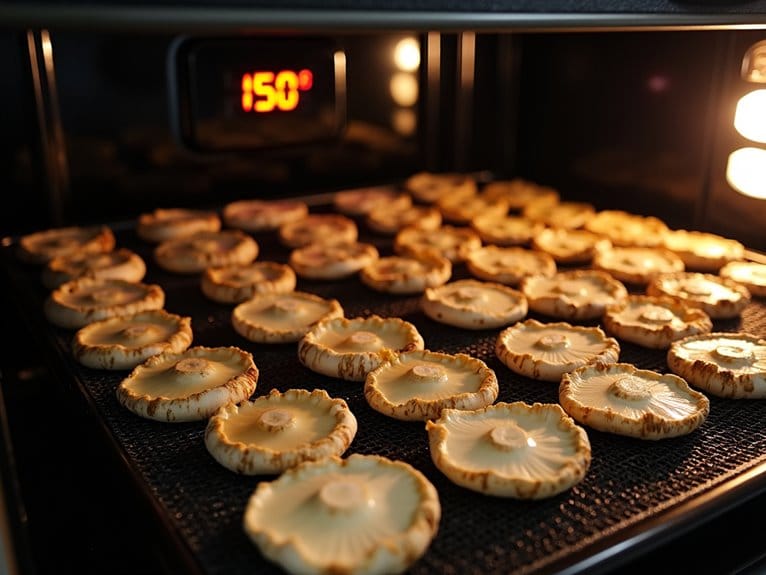
Since not everyone owns a dehydrator, your regular kitchen oven provides an excellent alternative for drying mushrooms! The key to success lies in maintaining the right temperature setting throughout the drying process.
No fancy equipment needed – your trusty kitchen oven can dry mushrooms perfectly with the right temperature control.
Set your oven between 130°F and 175°F, and follow these essential steps for perfect results:
- Place your sliced mushrooms in a single layer on a baking sheet – no overlapping allowed!
- Prop the oven door open slightly with a wooden spoon to guarantee proper airflow
- Monitor the process for 4-8 hours, depending on slice thickness
- Keep the temperature steady for consistent drying
- Test for doneness by checking if the mushrooms break rather than bend
Recommended Products
NOW WITH 11 TRAYS - Formally with 10 Trays - This Magic Mill Dehydrator Has Been Upgraded to 11 Trays to Add 30 inches of Extra Drying Space, While Keeping the Same Modern Slim Look
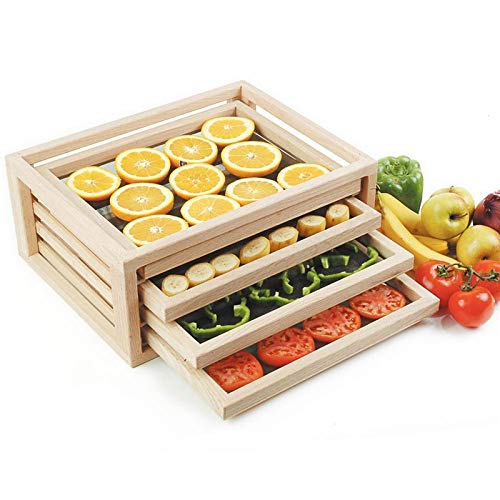
Handmade of oak with fiberglass drying screens

【7 TRAYS LARGE CAPACITY 6FT² MACHINE 3-YEAR WARRANTY】Food dehydrator machine has 7 stainless steel trays 12.51*9.84″, large capacity of up to 6ft². It is used for drying thick cut foods and various vegetables, fruits, meats, flowers etc. It easy to lock nutrients into the food
Sun Drying: Natural Preservation Process
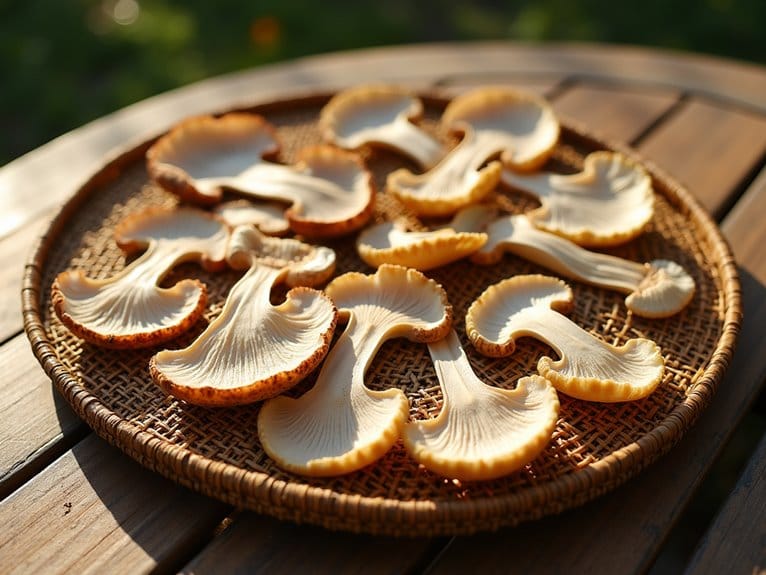
Mother Nature offers one of the most energy-efficient ways to preserve your mushrooms – sun drying! This traditional method works best in areas where the relative humidity stays below 55%, ensuring your fungi dry thoroughly and effectively.
To get started, arrange your mushrooms in a single layer on a mesh screen or drying rack. Make sure they're not touching each other – good airflow is key to success! Cover them with a light cloth to keep insects away while still allowing air circulation.
Your mushrooms will need about 4-8 hours of direct sunlight to dry completely. You'll know they're ready when they feel like lightweight rocks. For the longest shelf life, make sure they're 100% dry before storing them away. It's that simple – let the sun do all the work!
Creating and Storing Mushroom Powder
Once your mushrooms are fully dried by the sun, you've got even more preservation options! Transform your dried mushrooms into versatile mushroom powder by grinding them in a high-speed blender until they reach a fine consistency.
To create and store mushroom powder successfully, follow these key steps:
- Blend completely dried mushrooms until they form a fine powder
- Add a pinch of salt during blending for enhanced seasoning potential
- Mix different mushroom varieties for more complex flavors
- Store in airtight glass containers away from sunlight
- Check regularly for moisture and re-dry if needed
Your homemade mushroom powder will stay fresh for up to 6 months when stored properly, though it can last up to a year. For the best results, keep it in a cool, dark place and consider adding complementary spices like garlic or chili powder to create your own unique seasoning blend!
Recommended Products

E320 Machine with 2.2 Peak HP Motor

【Upgraded Safety Protection Lid】Open-Cover-Stop type grain grinder will automatically stop working when its lid is opened, largely enhancing use security. There are two induction switches in the buckles on the both sides, which make the mill get started only when the lid is closed completely. So if the grinder cannot turn on the first time, please adjust the lid like steps in image 5.
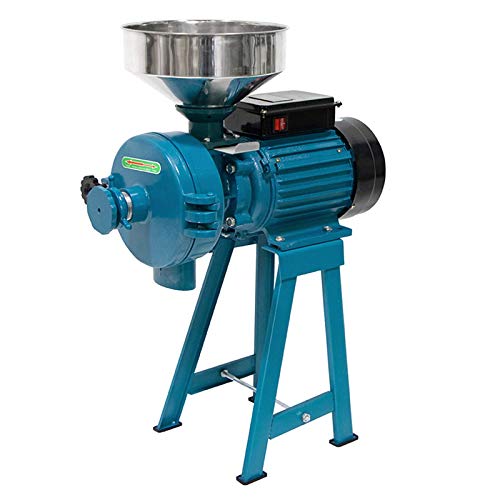
【Upgraded Dry Wet Grinder】Compared with the general models on the market, GM-62 Grain Mills can be used for both dry and wet. We have two types of grinding discs. The sand milling disc can be used for wet grinding, suitable for grinding soaked soybeans, rice, etc. into a pulp, and can be used as soy milk and rice cakes;Steel milling disc can be used for dry grinding, high hardness steel grinding disc. The grinding is smoother and more durable;
Rehydrating and Using Dried Mushrooms
Ready to bring your dried mushrooms back to life? The rehydrating process is simple – just soak them in warm water for 1-2 hours or boiling water for 20-30 minutes. For the best results, stick with warm or room temperature water to preserve that rich umami flavor!
Don't toss that soaking liquid! After straining it, you'll have a flavorful base for soups, sauces, or risottos. Your rehydrated mushrooms should feel similar to fresh ones – just be careful not to soak them too long, or they'll become mushy.
While dried mushrooms can last up to a year when stored properly in an airtight container, you'll want to use them soon after rehydrating. Keep your dried mushrooms in a cool, dark place, and they'll be ready whenever you need them!
Frequently Asked Questions
What Is the Best Way to Dehydrate Mushrooms?
You'll achieve ideal dehydration techniques by slicing mushroom varieties into 1/4-inch pieces, using a dehydrator at 110-120°F for 6-8 hours. For storage tips, make sure they're cracker-dry before storing in airtight containers.
Should Mushrooms Be Cooked Before Dehydrating?
You don't have to be a mushroom whisperer – cooking before dehydrating isn't mandatory! While various cooking techniques can enhance flavor, raw dehydration preserves texture perfectly. It's your choice based on desired final results.
Do You Wash Mushrooms Before Dehydrating Them?
You shouldn't wash mushrooms before dehydrating, as they'll absorb excess moisture. Instead, use gentle cleaning techniques like brushing or wiping with a damp cloth, depending on different mushroom types to maintain ideal moisture content.
What Are the Methods of Dry Mushrooms?
You can use various dehydration techniques like air drying, food dehydrators, or oven drying. Each method impacts mushroom storage differently, but they'll all preserve flavor when done properly at low temperatures with good airflow.