As an Amazon Associate, we earn from qualifying purchases. Some links on this site are affiliate links at no extra cost to you. Our recommendations are based on thorough research and editorial judgment.

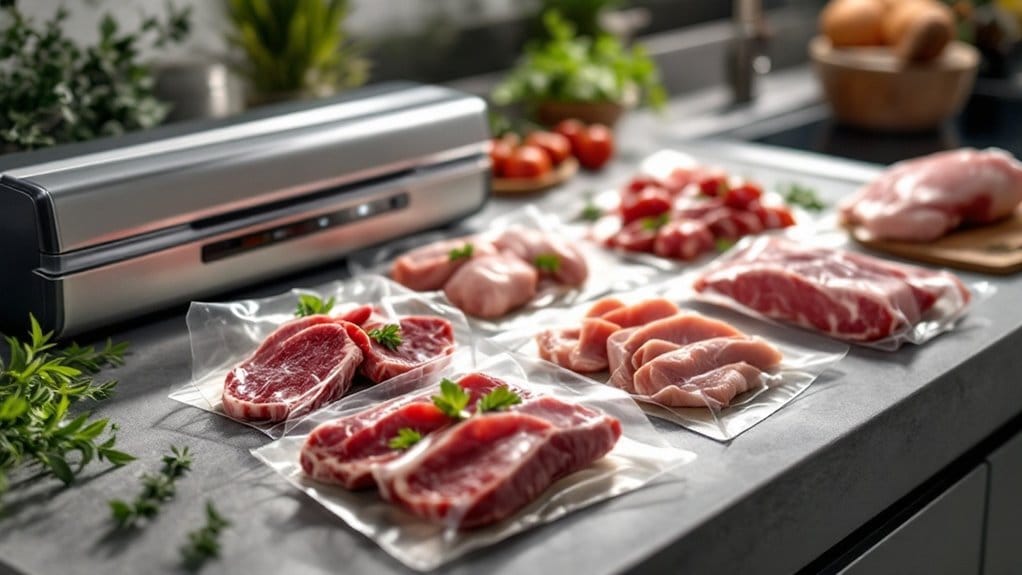
7 Best Methods: Vacuum Seal Meats Like Pros

You can vacuum seal meats like a pro with these seven simple methods! First, choose a reliable vacuum sealer that fits your needs. Then, know your meats—chicken, beef, and fish each have their quirks. Before sealing, pre-freeze meats for 1-2 hours to help maintain texture. Next, portion your cuts into meal-ready sizes for efficient storage! Don't forget to label your bags with dates and contents. Finally, master the sealing process and guarantee there's no air in those bags to prevent freezer burn! Stick around to uncover even more clever tips for your vacuum sealing journey!
Key Takeaways
- Pre-freeze meats for 1-2 hours to maintain texture and prevent mushiness during vacuum sealing.
- Use high-quality vacuum-seal bags designed specifically for meats to ensure effective sealing.
- Trim excess fat from meats to reduce spoilage risk and ensure better seal integrity.
- Flatten vacuum-sealed bags for efficient storage and to easily stack in the freezer.
- Regularly check seals for any signs of failure or damage to prevent freezer burn.
Choose the Right Vacuum Sealer
Choosing the right vacuum sealer is essential for preserving the quality of your meats. When you engage in a vacuum sealer comparison, you'll find options that suit different needs and budgets. Here's what to evaluate:
- Power and Performance:
- The Nesco VS-12 Deluxe is powerful and great for sous vide cooking. However, it can be loud and may overpower delicate foods. Additionally, it features a pulse function that allows for precision sealing of fragile items, enhancing its versatility.
- If you want to infuse flavors or extract liquids, the Anova Precision Chamber Vacuum Sealer excels at this. Just keep in mind it might leave a bit of air in your meat packages.
- Look for models with multiple sealing techniques. For instance, the Geryon offers gentle and normal modes, which can be handy for different types of foods.
- Beef: Cuts like steaks and roasts seal well. If you're sealing ground beef, pop it in the freezer for 1-2 hours first to firm it up. Vacuum sealing can extend the shelf life of beef significantly, lasting up to 2-3 years in the freezer.
- Pork: Pork chops and ribs are great candidates. Just like with beef, pre-freezing ground pork helps maintain texture.
- Lamb: Lamb chops and legs should be sealed quickly due to their high-fat content.
- Venison: This meat dries out quickly, so vacuum sealing is your best friend!
- Soft Fish: Delicate fish like tilapia can get mushy, so freeze them before sealing.
- Flash Freezing: This technique involves freezing meat very quickly. Aim for temperatures of -30°F (-34°C) or lower for the best results.
- High Pressure Freezing (HPF): Using high pressure, this method rapidly freezes meat while keeping its texture intact. It's a game-changer for maintaining quality!
- Vacuum Freezing: Remove air from your packaging before freezing to avoid freezer burn. It helps retain moisture and guarantees a delicious outcome.
- Portion Before Sealing: Cut meat into portions based on your meal plans. This makes it easy to grab what you need later.
- Use Appropriate Bag Sizes: Choose bags that fit your meat cuts comfortably. This allows for a tight seal without extra air.
- Flat Portions for Storage: Flatten your meat portions in the bags. It saves space and makes stacking in the freezer a breeze!
- Label and Date: Mark each bag with the date and contents. This helps you keep track of freshness and makes organization simple. Additionally, vacuum sealing helps maintain the quality and flavor of your meat cuts over time.
- Suction Sealers: Great for most items but tricky with liquids.
- Chamber Sealers: These handle everything, including liquids and odd shapes. Chamber vacuum sealers are especially beneficial for high-volume sealing needs, making them ideal for serious home cooks.
- Avoid overfilling bags; leave about an inch of space.
- Make sure bags are dry—wet bags can lead to seal failure.
- Type of meat (beef, chicken, pork)
- Cooking instructions (grill, bake, sauté)
- Storage dates (earliest to latest)
Recommended Products

Keeps food fresh up to five times longer

HIGH-POWER 1.5 HP OIL PUMP PERFORMANCE: The VacMaster VP321 is equipped with a powerful 1.5 HP pump, delivering strong, consistent vacuum pressure for high-volume sealing. This commercial vacuum sealer machine ensures fast cycle times and reliable performance for demanding environments.

IDEAL FOR COMMERCIAL USE: This ETL-compliant commercial vacuum sealer machine is designed for medium to high-volume food service and bulk packaging. Built with a durable stainless steel body and powerful pump, it delivers consistent performance for professional environments.
Understand Meat Types and Techniques
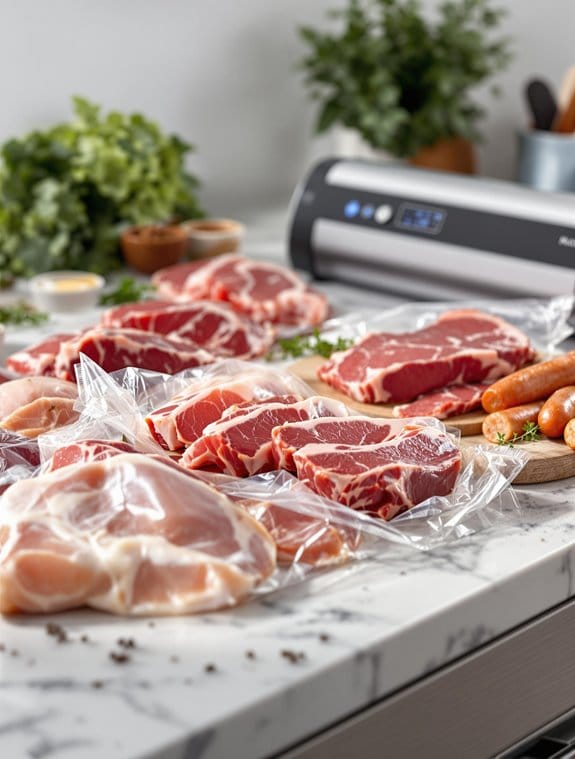
When it comes to vacuum sealing meats, understanding the various types and appropriate techniques is essential for preserving quality and flavor. Different meats require different approaches for effective meat preservation. Here's a quick rundown:
When using marinades, absorbent strips can help keep liquids in check. Don't forget to break your meat into meal-sized portions to avoid waste. Finally, label your bags clearly with contents and dates. This helps you track what you've sealed! With these sealing techniques, your meats will taste fresher and last longer—now that's a win-win!
Recommended Products

【Application】This sealing machine is used for vacuum packaging. Sealing Length reaches 20inch. Vacuumize the bags before sealing to extend product storage time such as for fruits, vegetables and so on.

EASY-TO-USE CONTROL PANEL AND PRESSURE INDICATOR: Perfect vacuum and seal with minimal effort using one-touch controls on this vacuum sealer machine. The intuitive control panel and pressure indicator ensure consistent results. For a quick seal, simply press the stop button to seal the bag and automatically open the chamber.

DIMENSIONS: 19.40 inches L x 21.90 inches W x 19 inches H and weighs 63.20 pounds
Pre-Freezing for Better Texture
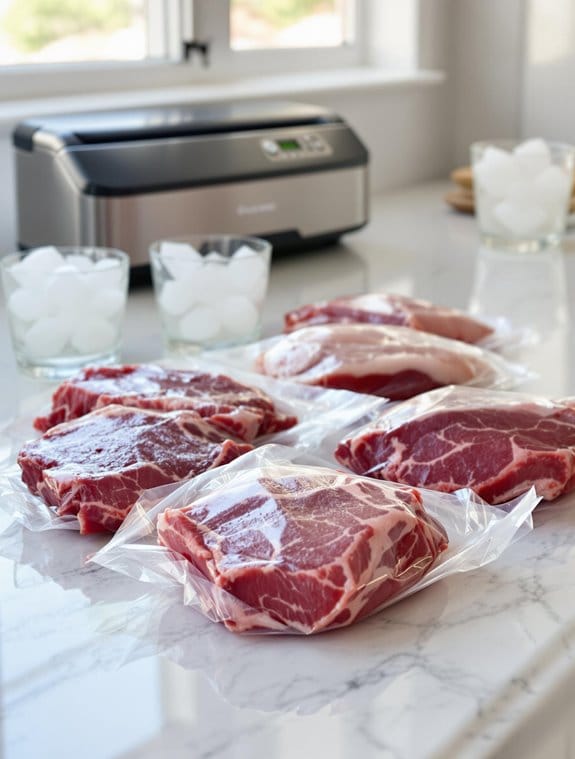
Utilizing pre-freezing techniques can markedly enhance the texture of your meats before vacuum sealing. When you flash freeze your meat, you quickly lower its temperature, which minimizes ice crystal formation. This helps preserve the muscle structure, keeping your meat tender and juicy! Continuous innovation in freezing methods is crucial to meet consumer expectations regarding meat quality.
Here are some effective pre-freezing methods you can try:
Recommended Products

Quick Freezing: Featuring a top-brand compressor, this blast freezer accelerates cold air circulation for rapid freezing. Hot foods can drop from 194℉ to 37.4℉ within 120 minutes, and in blast freeze mode, temperatures can decrease from 194℉ to -0.4℉ within 300 minutes. With a spacious capacity of 370 L / 13.1 Cu.ft, it is suitable for high-end seafood restaurants, Western dining establishments, central kitchens, and more. (Freezing time may vary with temperature and load; for reference only.)

Quick Freezing Performance - 220V 60HZ, US plug, 1800W, Temp. range: -40C to +3C (-40°F~+37.4°F). With a top-brand commercial compressor, this upright blast freezer boosts internal cold air circulation to deliver efficient rapid shock freezing and fast deep chilling. center temperature of hot foods can be reduced quickly from +90°C to +3°C(+194°F to +37.4°F) within 90 minutes. freezing rapidly- center temperature of hot foods can be reduced quickly from +90°C to -18°C( +194°F to -0.4°F) within 240 minutes.the lowest temperature:-40C (-40°F),Boasting a generous large capacity of 300 L / 10.5 Cu.ft

PROFESSIONAL SHOCK FREEZING TECHNOLOGY: Commercial shock freezer that rapidly freezes fresh food in 1-2 hours and hot food in 3-4 hours down to -40°F (-40°C). Professional blast chilling technology with 360-degree air convection locks in food quality and nutrition. Includes food probe to monitor center temperature. Perfect for restaurants, bakeries, hotels needing fast freezing equipment
Portion Control for Efficient Storage
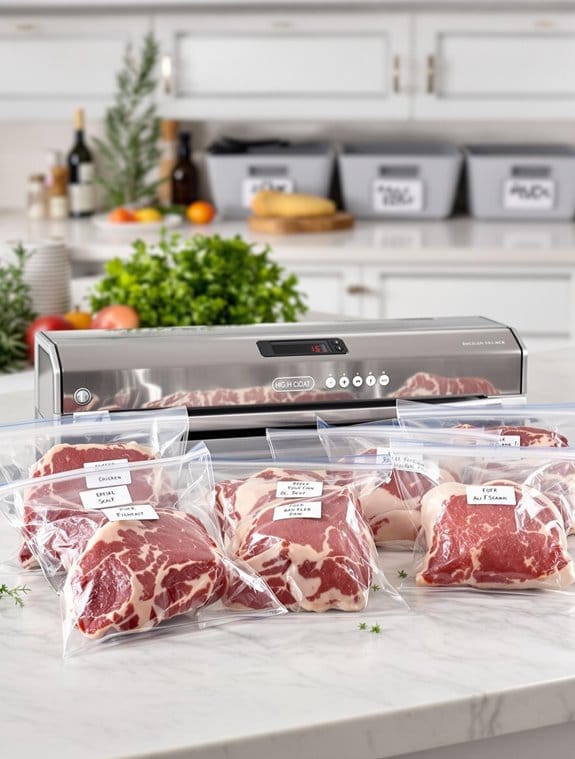
Effective portion control is essential for efficient meat storage, ensuring you get the most out of your vacuum sealing efforts. By dividing your meat into appropriate portion sizes before sealing, you can manage your meals better and avoid waste. Think about how much you typically use in one meal prep session and portion accordingly!
Here are some tips to help you nail portion control:
With these strategies, you'll prevent freezer burn and maintain the quality of your meat. Plus, it'll make meal prep a whole lot easier! Enjoy your organized freezer!
Master the Sealing Process
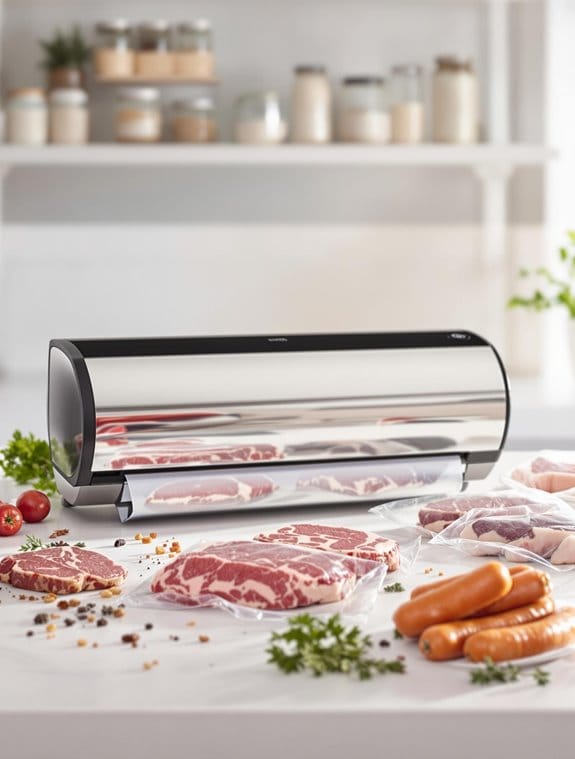
Mastering the sealing process is essential for preserving the quality of your meats. A solid seal means you won't have to worry about freezer burn or spoilage. Here's how to achieve that seal integrity you need!
1. Choose the Right Sealer:
2. Prep Your Meat****:
– For ground meats, pre-freeze for 1-2 hours. This keeps their texture intact when sealing! Proper headspace is also important to prevent liquid from entering the seal.
3. Seal Smartly****:
4. Use Double Heat-Seals****:
– A double seal adds extra protection, ensuring your meat stays fresh!
5. Regular Maintenance Tips****:
– Keep your vacuum sealer clean and check the sealing bars for wear. This way, you'll maintain performance and avoid mishaps.
Following these steps gives you the best shot at successful vacuum sealing! Happy sealing!
Recommended Products

【Precision Heavy-Duty Inverter Compressor】Our flagship commercial dry ager pairs a high-capacity variable-frequency inverter compressor with 1 ° F temperature accuracy — delivering the precision of a top-tier dry ager at a fraction of the cost. Self-contained humidity regulation (60–85%) with no water line. This commercial dry age fridge is purpose-built for high-volume steakhouses, butcher shops, Japanese restaurant, hotel catering, and food production. Maximum Capacity, Maximum Precision.

3 Preset Buttons for Meat/fish, Liquid, and Dry Food

Professional chamber vacuum devices for vacuuming and in the sous vide cooking process. Automatic vacuum sealing device for liquids, soups and dry food, meat, fruit, vegetables, fish, etc.
Label and Organize Your Bags
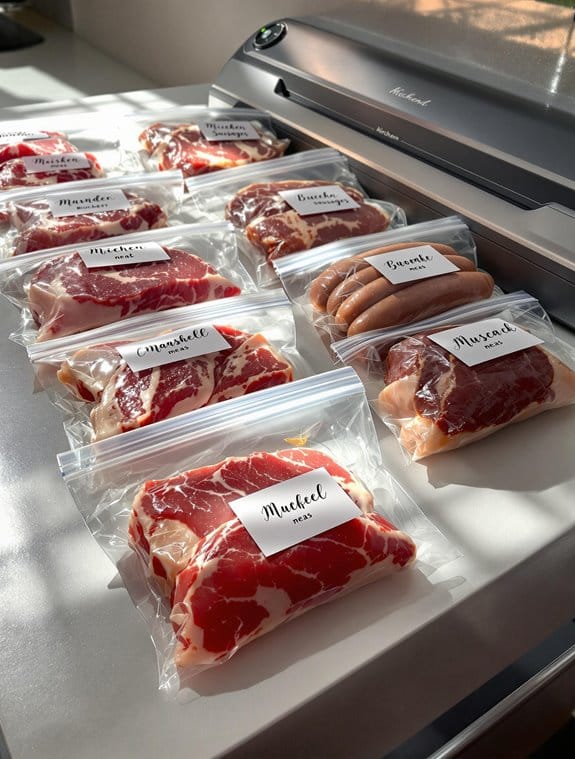
Labeling your vacuum-sealed bags is essential for keeping your kitchen organized and ensuring food safety. When you invest time in labeling techniques, you make it easier to identify the contents and storage dates, which helps prevent any mystery meals lurking in your freezer!
Start by choosing bags with preprinted spaces for labeling, or simply grab a permanent marker. Clearly list the contents, cooking instructions, and the date. This way, you'll always know what to pull out for dinner.
Next, adopt an organizing system that suits your style. You can categorize your bags by:
Storing your bags systematically will maintain their integrity and make retrieval a breeze. These bags are compatible with most vacuum sealers, stack them in a bin or drawer, and keep similar items together.
Long-Term Storage Strategies
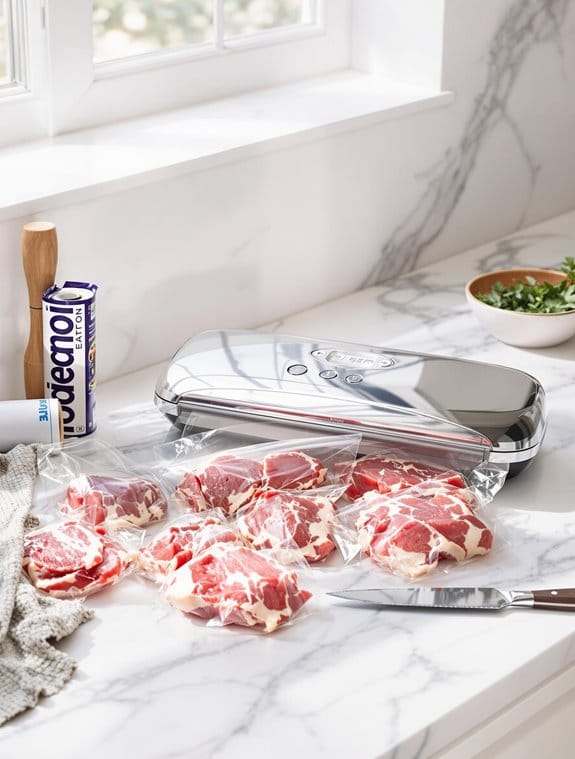
After organizing and labeling your vacuum-sealed bags, it's time to think about how to store your meats long-term. Proper meat preservation is essential if you want to enjoy your delicious cuts for months or even years! Here are some strategies to enhance your vacuum efficiency:
- Freezing: Most meats can last considerably longer in the freezer. For example:
- Beef: 2-3 years
- Pork: 1.5-2 years
- Lamb and Venison: 2 years
Recommended Products

EXTEND YOUR FOOD’S SHELF LIFE: Protect it from freezer burn and oxidation, optimize storage space

SET INCLUDES: 3.5" Paring Knife, 5" Utility Knife, 8" Chef's Knife, 9" Slicing Knife, 9" Bread Knife, 12" Steel, and Block

EASY-TO-USE CONTROL PANEL AND PRESSURE INDICATOR: Perfect vacuum and seal with minimal effort using one-touch controls on this vacuum sealer machine. The intuitive control panel and pressure indicator ensure consistent results. For a quick seal, simply press the stop button to seal the bag and automatically open the chamber.
Frequently Asked Questions
Can I Vacuum Seal Cooked Meats Safely?
Yes, you can vacuum seal cooked meats safely. Just make certain they're cooled to room temperature first and follow proper vacuum sealing techniques to minimize bacterial risks and maintain cooked meat safety during storage.
How Do I Clean My Vacuum Sealer Properly?
To keep your vacuum sealer in tip-top shape, follow these maintenance tips: regularly clean it after each use, check for common issues like worn sealing strips, and store it properly to prolong its life.
What Types of Bags Work Best for Vacuum Sealing?
When choosing vacuum bag types, opt for 3 or 4 mil bags for durability. Follow sealing tips, like ensuring no air pockets and sealing edges properly, to maximize freshness and prevent freezer burn.
Is Vacuum Sealing Effective for Marinated Meats?
Vacuum sealing isn't particularly effective for marinated meats. While it guarantees thorough coating, it doesn't greatly enhance flavor absorption or reduce marination time, so you should stick to standard marination practices for best results.
How Can I Tell if My Vacuum Seal Is Secure?
You might think it's hard to check if your vacuum seal's secure, but simple vacuum seal testing can help. Look for air leakage by inspecting for bubbles, moisture, or freezer burn signs on your bags.