As an Amazon Associate, we earn from qualifying purchases. Some links on this site are affiliate links at no extra cost to you. Our recommendations are based on thorough research and editorial judgment.

Best DIY Buttermilk Swaps for Perfect Pancakes

You can easily swap out buttermilk for perfect pancakes with these simple DIY options! Try this: mix 1 tablespoon of vinegar or lemon juice into 1 cup of milk and let it sit for about 5 minutes. Need a quick fix? Use 6 ounces of yogurt mixed with ¼ cup of water or milk—whisk well! For a dairy-free choice, almond milk with vinegar works great too! And don’t forget the buttermilk powder—just blend ¼ cup with 1 cup of water! Got your whisk ready? You’re already halfway to fluffy pancake goodness, and there’s more to discover ahead!
Key Takeaways
- Mix 1 tbsp vinegar or lemon juice with 1 cup milk and let it sit for 5-10 minutes to create a quick buttermilk substitute.
- Use 1.75 tsp cream of tartar mixed with 1 cup milk for a tangy flavor that mimics buttermilk’s acidity.
- Greek yogurt can be thinned with ¼ cup water or milk for a creamy buttermilk alternative that enhances moisture.
- Substitute kefir in a 1:1 ratio for buttermilk, providing a similar tang and aiding in pancake rise.
- Non-dairy milks like almond or soy can be mixed with vinegar or lemon juice to replicate buttermilk’s acidity for vegan pancakes.
Milk and Vinegar Combo
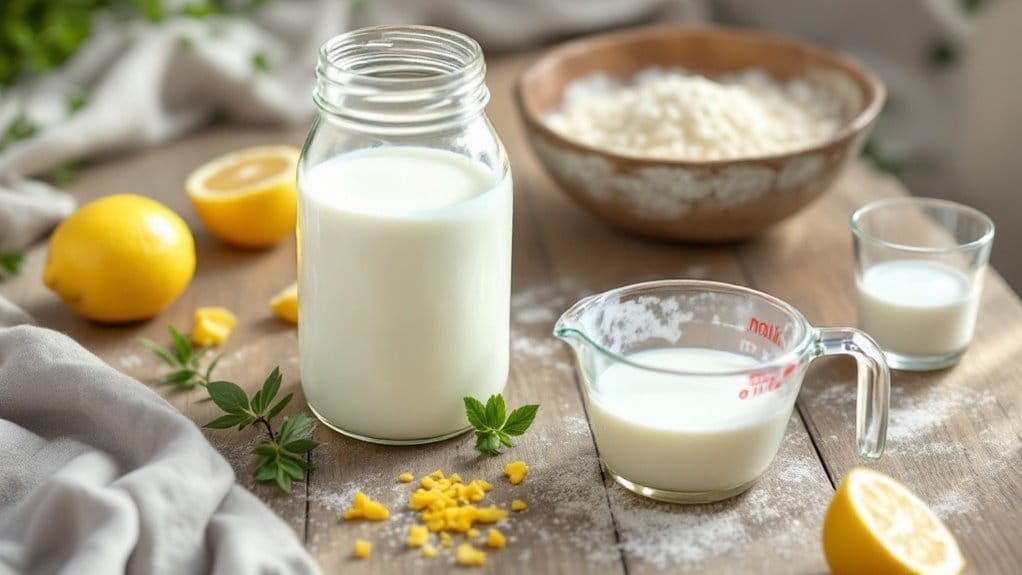
When you’re in a pinch and need buttermilk for pancakes, a simple milk and vinegar combo can save the day. Just grab 1 tablespoon of white vinegar and mix it with 1 cup of milk. Pour the vinegar into a measuring cup, then fill it with milk. Stir gently and let it sit for 5 minutes to kick off the curdling process. This step is essential for achieving that pancake fluffiness you crave!
Here’s how it works:
- Curdling: Watch for the mixture to thicken and curdle after five minutes. That’s your cue it’s ready!
- Pancake Fluffiness: The vinegar’s acidity reacts with baking soda, making your pancakes rise beautifully. This reaction is crucial for the necessary lift in your pancakes.
- Moisture: While this homemade buttermilk may be a bit thinner, it still does the job!
Just remember, overmixing your batter can lead to rubbery pancakes, so stir gently. You want fluffy, not tough! If you’re feeling adventurous, this combo works in other recipes too. So, go ahead and whip up those pancakes—you’ve got this!
Lemon Juice and Milk
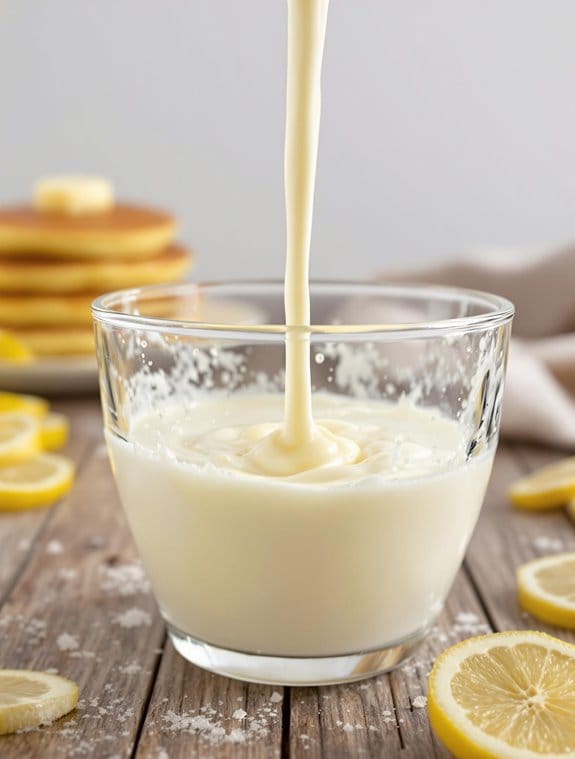
When you’re in a pinch and need a buttermilk substitute, lemon juice and milk are a lifesaver! Just mix one tablespoon of lemon juice with a cup of milk, and you’re ready to go. This simple combo not only thickens up nicely but adds a delightful tang to your pancakes, making them extra delicious! The acidity of this mixture is crucial for achieving the perfect rise and texture in your pancakes.
Quick Preparation Method
To whip up a quick buttermilk substitute, simply combine lemon juice or vinegar with milk. This method is super easy and gives you the delightful buttermilk benefits without the wait! Just follow this simple ratio: use 1 tablespoon of lemon juice or vinegar for every 1 cup of milk.
Here’s how to do it:
- Measure 1 tablespoon of lemon juice or vinegar.
- Stir it into 1 cup of milk—whole milk gives a richer flavor, but 2% or non-dairy options work too!
- Don’t worry if the mixture curdles; it’s totally normal and even desirable. Buttermilk provides lift and flavor to your pancakes, ensuring they are light and fluffy.
If you need less than a cup, here’s a quick guide:
- For ¾ cup: 1 ½ teaspoons of lemon juice/vinegar + milk to fill.
- For ⅔ cup: 2 teaspoons + milk.
- For ½ cup: 1 teaspoon + milk.
- For ¼ cup: ¾ teaspoon + milk.
Letting it sit for 10-30 minutes can enhance the flavor, but you can use it right away! Now you’re ready to tackle those pancake recipe variations with your homemade buttermilk! Enjoy!
Flavor Enhancements and Tips
Using lemon juice and milk as a buttermilk substitute not only mimics the desired tang but also enhances the flavor of your pancakes. This combination is a great way to add some flavor depth to your breakfast. To make it, simply use 1 tablespoon of fresh lemon juice for every cup of milk. Let it sit for about 5 minutes to thicken, and voilà! This method works particularly well because buttermilk’s acidity reacts with baking soda, contributing to a light and fluffy texture in your pancakes.
Here are some tips to get the best results:
- Choose the Right Milk: Opt for 2% or whole milk for the best consistency.
- Fresh is Best: Fresh lemon juice beats bottled every time, but if you’re in a pinch, bottled works too.
- Watch Your Ratios: Too much lemon juice can make your pancakes overly acidic, affecting browning and texture.
- Consider Other Options: If you want to experiment, try using other alternative acidifiers like cream of tartar or yogurt mixed with milk.
Cream of Tartar Method
Cream of tartar can be a lifesaver in the kitchen when you’re out of buttermilk. If you’ve got this handy pantry staple, you can whip up a buttermilk substitute in no time! Just remember this simple ratio: for every cup of buttermilk, mix together 1 and ¾ teaspoons of cream of tartar with 1 cup of milk.
Here’s how to do it:
- Combine the cream of tartar with your dry ingredients first to prevent clumping.
- Then, add the milk and whisk vigorously.
- Let it sit for about 15 minutes before using it in your pancake mix.
Now, let’s talk about the cream of tartar benefits! It adds acidity, mimicking buttermilk’s properties, ensuring your pancakes rise nicely. However, keep in mind the cream of tartar limitations—it might not have the rich flavor of real buttermilk. Cultured buttermilk is often recommended for recipes where buttermilk is central. Use it right away for best results, and remember that over-sitting can lead to graininess.
Yogurt as a Substitute
When you’re in a pinch for buttermilk, yogurt is another fantastic alternative that can deliver great results in your pancake batter. You’ll find that Greek yogurt works best due to its thickness and rich texture, but plain yogurt can also do the trick. Just remember, flavored yogurt isn’t the way to go; you want to keep those delicious pancake flavors intact!
Here’s a quick guide on how to use yogurt as a substitute:
- Greek Yogurt: Mix 5.3 ounces with 1 1/3 cups of milk. This yields about 2 cups of buttermilk substitute.
- Plain Yogurt: Combine 6 ounces with 1/4 cup of milk or water to make 1 cup of buttermilk substitute.
Yogurt’s natural acidity helps your pancakes rise beautifully, while its moisture content can add a lovely richness. In addition, using yogurt can also enhance the rich texture of your pancakes, making them even more delightful. Just keep in mind that using yogurt might change the flavor and texture slightly. It’s a fun way to adapt your recipes while keeping the nutritional values in check! So, next time you’re cooking, don’t hesitate to reach for yogurt. Your pancakes will thank you!
Recommended Products

Important - Refrigerated items are perishable and tend to have short shelf lives - some of these can be as little as two weeks from the date of receipt - if you are ordering a large quantity, or are otherwise concerned about expiration dates, consider a frozen product.

EASIYO PLAIN 2% GREEK STYLE YOGURT: Our thick and creamy plain Greek Style yogurt in its purest form. With no added sugars, it’s a great companion for tasty toppings like fruit and granola. (Images containing garnishes and mixins are serving suggestions).

Organic Icelandic-style skyr yogurt High in protein (16g–21g) Lactose-free, real dairy Billions of live probiotics (BB12) Organic regeneratively farmed Grass-based, pasture-raised Farmer-, women-, family-owned brand
Thinning Yogurt Techniques
When you’re looking to thin yogurt for your pancake batter, it’s all about finding that perfect balance! You can easily adjust the consistency by mixing yogurt with water or milk, and a little whisking goes a long way. Let’s explore some simple techniques and ratios to help you whip up a delightful buttermilk substitute! Incorporating the tangy flavor of buttermilk can enhance the overall taste of your pancakes, making them more flavorful and enjoyable.
Yogurt Consistency Adjustments
Thinning yogurt is a simple yet effective way to create a buttermilk substitute that works well in various recipes, especially pancakes. By adjusting the yogurt texture, you can make it just right for your needs! Here’s how to do it:
Thinning with Water:
- Mix 6 ounces of plain yogurt with 1/4 cup of water.
- Whisk until smooth to avoid lumps.
- If you want a thinner batter, just add more water!
Thinning with Milk:
- Combine 6 ounces of plain yogurt with 1/4 cup of milk for a richer flavor.
- Whole milk, 2%, or even non-dairy milks work well here.
- Adjust the amount based on how thick or creamy you want it!
Tips:
- Use different yogurt types, like Greek or non-fat, to see how they change the final yogurt texture.
- For very thin batters, add water or milk gradually.
- Always whisk thoroughly to avoid clumps—nobody likes a lumpy pancake!
- Using yogurt as a substitute for buttermilk can also enhance the moisture and tanginess of your pancakes.
Experiment and find the perfect consistency for your pancakes! You’ll be flipping delicious pancakes in no time!
Mixing Tips and Ratios
To create the perfect buttermilk substitute using yogurt, it’s essential to understand the right mixing tips and ratios. Yogurt’s natural acidity brings some fantastic buttermilk benefits, making your pancakes fluffy and delicious!
Here’s how to thin your yogurt for that ideal consistency:
- Basic Ratio: Combine 6 ounces of plain yogurt with ¼ cup of water or milk. This’ll give you a creamy buttermilk substitute!
- Adjust as Needed: If your batter needs to be thinner, add a bit more water or milk until it reaches your desired texture.
- For Smaller Amounts: If a recipe calls for less buttermilk, you can scale down. Just mix 3 ounces of yogurt with 2 tablespoons of water or milk.
Baking Tips: Always whisk your mixture well to avoid lumps. Remember, yogurt can be a bit thick, but don’t worry! With these adjustments, you’ll have a perfect substitute that works in pancakes, cakes, and more!
Try it out and enjoy the tasty results—you might find yourself reaching for yogurt instead of buttermilk from now on! Happy baking!
Using Kefir Effectively
Kefir is an excellent choice for those looking to swap buttermilk in pancake recipes. It’s tangy and light, making your pancakes fluffy and flavorful! Plus, kefir benefits your health with its probiotic content.
To use kefir effectively, follow these simple steps:
- Substitution: Use kefir in a one-for-one ratio instead of buttermilk. You won’t even notice the difference!
- Mixing: Whisk together your wet ingredients—kefir, egg, and vanilla extract—separately from the dry ones.
- Rest the batter: Let your batter sit for 15 minutes before cooking. This helps the baking soda react with the kefir’s acidity.
- Consistency: Aim for a thick batter. If it’s too runny, add a bit more flour or kefir!
Additionally, homemade food using kefir can provide better control over ingredients and enhance the overall taste and health benefits of your pancakes.
For some pancake variations, try adding blueberries, chocolate chips, or even fruit-flavored kefir! You can also experiment with gluten-free options like oat flour.
When cooking, use a non-stick pan over medium heat and a little oil—flip once golden! Serve warm, and don’t forget the maple syrup or fresh fruit on top. Enjoy your pancake adventure!
Recommended Products

✔️ Essential Vitamin for Daily Intake - Make sure you're getting all the nutrients your body needs with our Vitamin B1 powder or Thiamine HCl powder! Our Thiamine Hydrochloride, or B1 Vitamins, is a great source of Vitamin B1, and it's important for maintaining optimal health.* Take our Thiamine B1 Supplement, or Thiamine 100mg powder, for daily Vitamin B intake!

Easy to Use: The Classic 575 kitchen blender has 4 cycles for perfect soups, smoothies, and shakes

Hoosier Hill Farm Whole Milk Powder, made from 100% hormone-free whole milk, is great to have on hand for cooking, baking, or any time you need a refreshing glass of milk. High in protein and rich in nutrients, Whole Milk Powder has a sweet, pleasing flavor, just like fresh milk.
Buttermilk Powder Benefits
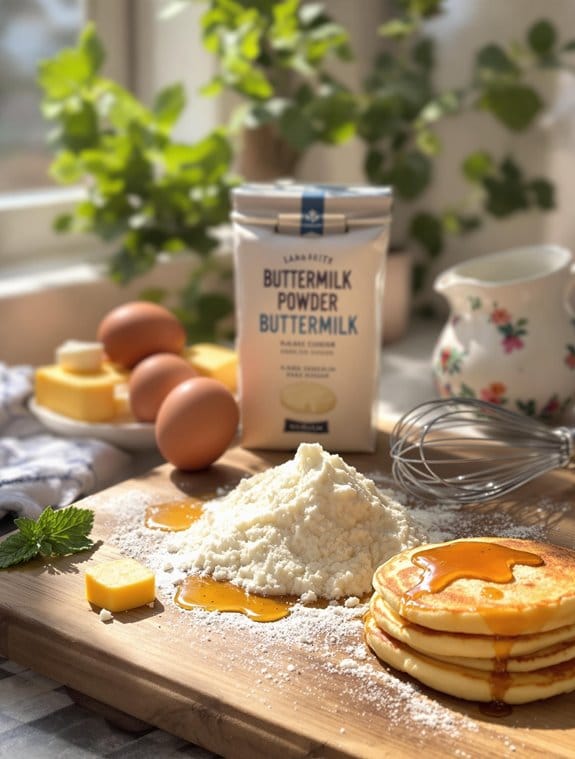
Buttermilk powder offers a convenient alternative to fresh buttermilk, making it a favorite among home bakers. You’ll love how it simplifies your cooking! With a long shelf life, you can store it easily without worrying about spoilage. Plus, it reduces waste, eliminating those half-used cartons of buttermilk in your fridge.
Here are a few key benefits of buttermilk powder:
- Nutritional Benefits: It retains many of the good nutrients found in fresh buttermilk, providing protein and calcium for your pancakes.
- Flavor Profile: It adds a rich, creamy taste to your baked goods, enhancing everything from pancakes to muffins.
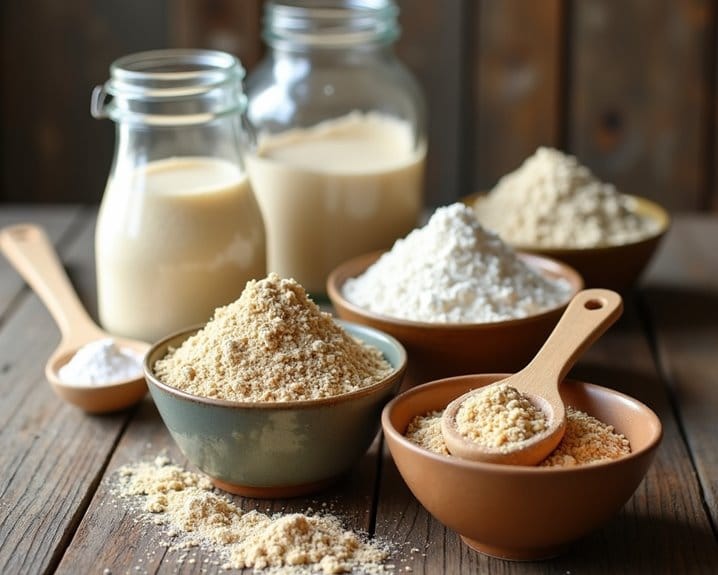
- Easy Substitution: Just mix 1/4 cup of buttermilk powder with 1 cup of water or milk. Simple, right? Buttermilk powder is a great option for those who want to enjoy buttermilk pancakes without the hassle of buying fresh ingredients.
When you use buttermilk powder, you’re not just saving time; you’re also ensuring consistent quality in your recipes. It integrates seamlessly into your dry ingredients, making it a breeze to use. So, the next time you whip up pancakes, reach for that buttermilk powder and enjoy delicious results without the fuss! Happy baking!
Recommended Products

𝗣𝗿𝗲𝗺𝗶𝘂𝗺 𝗪𝗵𝗼𝗹𝗲 𝗠𝗶𝗹𝗸 𝗣𝗼𝘄𝗱𝗲𝗿: Discover the richness of Z Natural Foods' Whole Milk Powder, giving you the convenience of pure, creamy whole milk in a powdered form. Sourced from Wisconsin cows, savor the real flavor of genuine dairy in every scoop.

Premium Grade A Low Heat Non-Fat Dry Milk Powder (NDM) for superior solubility and flavor. An excellent source of skim milk solids without the fat.

Sour Cream Alternatives
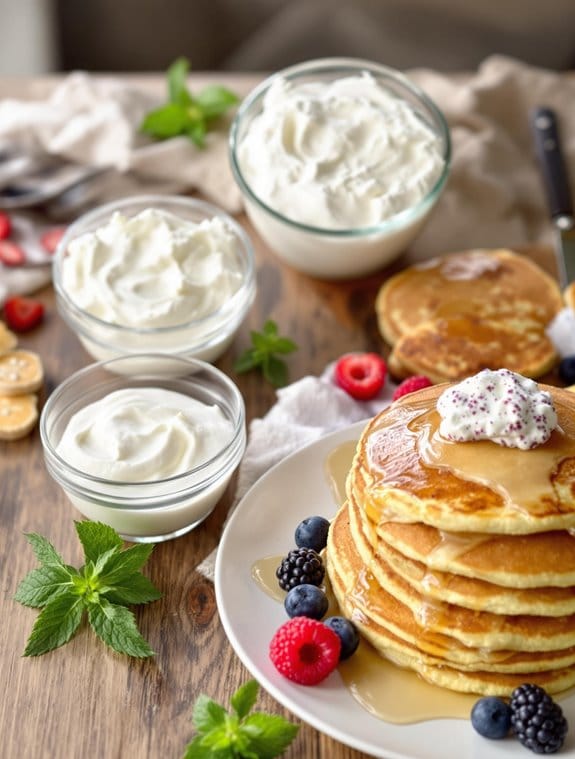
If you’re looking to enhance your pancake recipes but don’t have sour cream on hand, there are plenty of alternatives that can deliver similar results. Here are some excellent sour cream substitutes you can try:
- Full-Fat Greek Yogurt: This works perfectly as a 1:1 substitute. It’s thick, creamy, and adds that delightful tang!
- Mayonnaise: Believe it or not, you can use mayonnaise as a 1:1 replacement. It’ll add moisture, though it’s less tangy.
- Cottage Cheese: Blend cottage cheese with a bit of milk and lemon juice. You’ll achieve a lovely texture and taste!
- Kefir: Unflavored kefir can add a nice tang. Just swap it in for sour cream in equal amounts.
- Buttermilk: Thin buttermilk with a splash of milk or water for a similar tangy flavor.
When using these baking alternatives, keep in mind that some may need slight adjustments in quantity to get the right consistency. Don’t hesitate to experiment! Your pancakes will still turn out delicious, and you’ll impress everyone with your creativity in the kitchen! Happy cooking!
Recommended Products


You'll LOVE our Mango Major Grey Chutney by Rani Brand--Here's Why:
Non-Dairy Milk Options
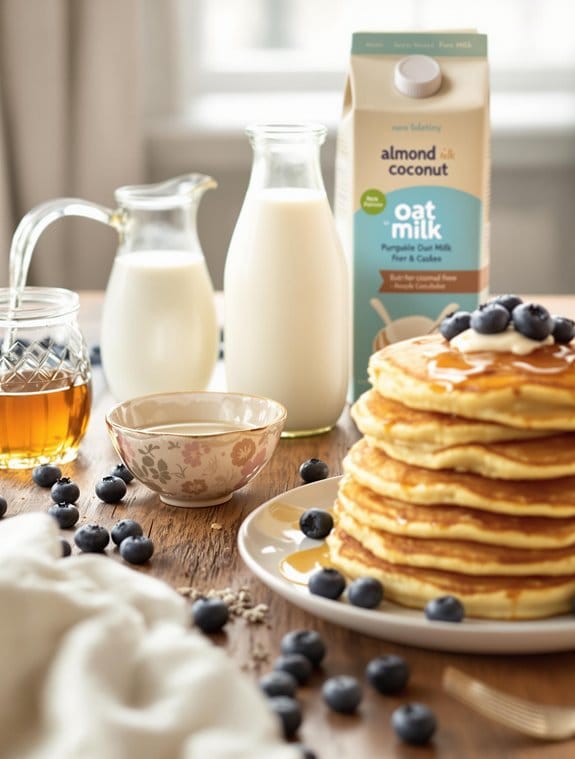
When it comes to creating delicious pancakes, non-dairy milk options can be a game changer, especially for those avoiding animal products. You’ve got several great choices that can help you whip up the perfect pancake variations!
- Almond Milk: Mix it with vinegar or lemon juice to create a dairy-free buttermilk. It’s light and fluffy but may not be as rich in protein as other options.
- Soy Milk: This one’s a winner! It mimics cow’s milk closely and offers better protein content, making your pancakes thicker and fluffier. Just combine it with some lemon juice or vinegar.
- Oat Milk: If you’re looking for something creamy, oat milk is your go-to! It’s nut-free, perfect for those with allergies, and gives pancakes a unique flavor. Just remember to use unsweetened!
- Coconut Milk: While it’s not ideal for buttermilk, a little coconut milk beverage can add a distinct flavor. Use it sparingly with other non-dairy milks to balance richness.
With these nut milk options, you’re set for some amazing pancake adventures! Enjoy!
Tips for Best Results
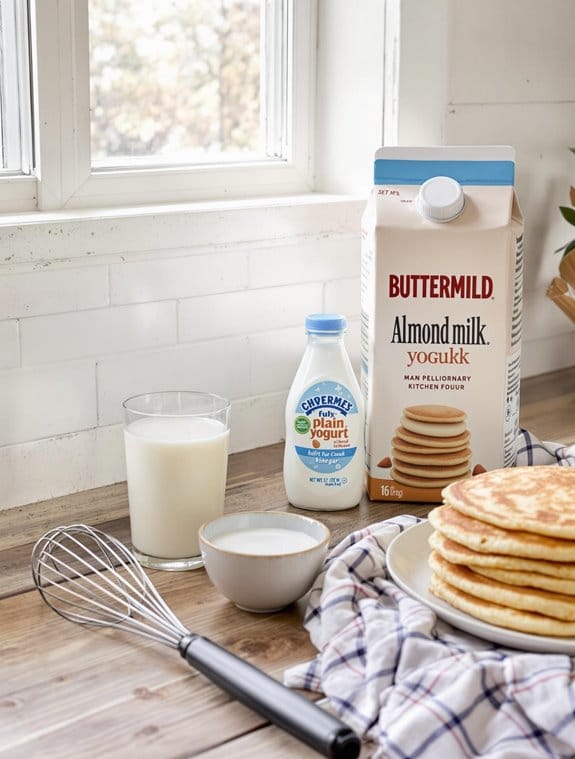
When it comes to getting the best results with your buttermilk substitute, choosing the right one is key! You’ll want to adjust the ratios carefully and allow the mixture to rest for the best flavor and texture. Trust us, these little tips can make a big difference in your pancake game!
Choose Right Substitute
Choosing the right buttermilk substitute can make a significant difference in your pancake’s flavor and texture. Each option has its unique health benefits and flavor profiles, so let’s find the best fit for you!
- Milk with Vinegar or Lemon Juice: This classic substitute adds a nice tang. Mix 1 tablespoon of vinegar or lemon juice with 1 cup of milk, and let it sit for 5-10 minutes.
- Plain Yogurt: Thick and creamy, yogurt can give your pancakes a rich flavor. You can use it straight or thin it with water or milk to reach your desired consistency.
- Kefir: If you’re feeling adventurous, try kefir! It offers a fun tanginess and works as a 1:1 substitute.
- Dairy-Free Options: Don’t worry if you’re vegan! Use non-dairy milk with a splash of vinegar or lemon juice. Just remember, they might not curdle like dairy-based options.
Adjust Ratios Carefully
Adjusting the ratios of your buttermilk substitute is essential for achieving the perfect pancake texture and flavor. Getting the acidity balance just right can make all the difference! Here are some key tips for ratio adjustments:
- White Vinegar or Lemon Juice: Use 1 tablespoon per 1 cup of milk. This adds that tangy flavor we love in buttermilk.
- Cream of Tartar: For a thicker alternative, go for 1 3/4 teaspoons per 1 cup of milk.
- Yogurt and Water: Mix 6 ounces of yogurt with 1/4 cup of water or milk to create a creamy, balanced substitute.
Remember, if you add too much acid, your pancakes could end up too tangy and affect browning. On the flip side, not enough acidity can lead to bland flavor.
For those using non-dairy options, check the acidity levels, as they might need a little extra help with lemon juice or vinegar. Just be careful not to over-thin your batter with milk, or you might lose the delightful texture we’re aiming for! Happy pancake making!
Allow Mixture to Rest
After you’ve carefully adjusted the ratios of your buttermilk substitute, allowing the mixture to rest is a key step that can enhance your pancake result. This resting period, just five minutes, lets the acid mingle with the milk, creating that delightful buttermilk-like texture! You’ll notice a slight curdling process, which is a good sign that your mixture is ready.
Here are some tips to get the best results during this resting time:
- Acid Amount: Use 1 tablespoon of lemon juice or vinegar for every cup of milk.
- Mix it Up: Stir gently to guarantee even acid distribution throughout your mixture.
- Watch for Thickness: You want it slightly thickened and curdled before adding it to your batter.
- Room Temperature: Keeping the mixture at room temperature helps the reaction along.
Frequently Asked Questions
Can I Substitute Buttermilk in Savory Dishes Too?
Substituting buttermilk in savory recipes can elevate your dish’s tangy flavor. You can use milk with vinegar or yogurt to replicate that acidity, ensuring your creations stay tender and deliciously inviting.
How Does Buttermilk Affect Pancake Fluffiness?
Buttermilk benefits your pancake texture greatly. Its acidity reacts with baking soda, creating carbon dioxide that makes pancakes fluffy. Additionally, it tenderizes the batter, preventing toughness and ensuring a light, airy final product.
Is There a Gluten-Free Buttermilk Substitute?
Awesome alternatives abound. You can use plant-based milks mixed with vinegar or lemon juice for gluten-free, dairy-free options. Just let it curdle, and you’re set for delicious recipes without the gluten!
Can I Use Flavored Yogurt for Buttermilk Replacement?
You shouldn’t use flavored yogurt for buttermilk replacement. While it might seem tempting for pancake flavor enhancement, it can alter the overall taste undesirably. Stick to plain yogurt for the best results in your recipes.
How Long Can Homemade Buttermilk Substitutes Be Stored?
Like a fleeting summer breeze, homemade buttermilk substitutes have a short shelf life. For best results, follow storage tips: refrigerate for up to 24 hours and freeze for longer-lasting freshness when needed.