As an Amazon Associate, we earn from qualifying purchases. Some links on this site are affiliate links at no extra cost to you. Our recommendations are based on thorough research and editorial judgment.

Complete Gluten Free Flour Substitutions For Any Recipe

To substitute gluten-free flour in any recipe, you'll want to follow the 40-60 rule: use 40% whole grain flour (like sorghum) and 60% starch (like tapioca). For best results, add 1 teaspoon of xanthan gum per cup of flour blend as a binding agent. Remember to increase moisture content slightly, as gluten-free flours tend to be more absorbent. For improved texture, consider adding an extra egg or ½ teaspoon of baking powder. The perfect gluten-free bake awaits in the details below!
Key Takeaways
- Use a 40-60 ratio of whole grain flour to starch, combining sorghum flour with tapioca starch for an effective all-purpose substitute.
- Replace regular flour with equal parts oat flour, rice flour, and tapioca starch for a reliable 1:1 gluten-free conversion.
- Add 1 teaspoon xanthan gum per cup of gluten-free flour blend to achieve proper binding and texture similar to wheat flour.
- Measure gluten-free flours by weight rather than volume, using 135 grams as equivalent to 1 cup of all-purpose flour.
- Increase moisture content and add ½-1 teaspoon extra baking powder when using gluten-free flour blends to improve texture and rise.
Understanding Gluten Free Flour Properties
When you're diving into gluten-free baking, understanding how different flours work is absolutely vital for success! Unlike wheat flour, gluten-free flours each have unique properties that affect your final baked goods in distinct ways.
You'll need to take into account how absorbent flours like coconut and almond interact with moisture, as they'll require different liquid ratios in your recipes. The texture and moisture balance is vital – that's why you'll often see starches like tapioca and potato in flour blends to help create that desired fluffiness!
To achieve the best results, you'll want to combine multiple gluten-free flours. This not only improves binding capabilities but also enhances nutritional value. Each flour brings its own properties to your baking, from protein-rich chickpea flour for structure to lighter starches for that perfect crumb texture.
Essential Flour Blending Ratios
Creating successful gluten-free flour blends depends on understanding key ratios that'll give you consistent results! When crafting your flour blend, start with the 40-60 rule: combine 40% whole grain flour like sorghum flour with 60% tapioca starch for the perfect balance.
For a protein-rich option that's great for flatbreads, you'll want to mix equal parts chickpea and sorghum flour. Looking for something more versatile? Try the 1-1-1 approach: combine equal parts oat flour, rice flour, and tapioca starch to create an excellent all-purpose flour substitute.
If you're focusing on moisture retention in your gluten-free baking, blend 1 part almond flour with 2 parts coconut flour. This combination adds richness while maintaining the perfect texture in your favorite recipes!
Recommended Products

Bulk Pack: Contains eight 2-pound bags of Cup4Cup Multipurpose Gluten Free Flour.
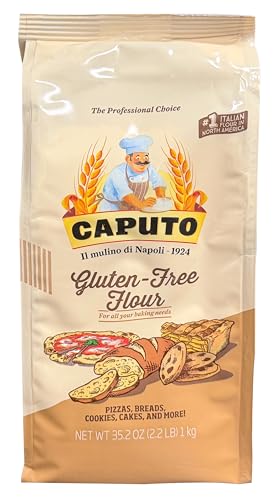
Professional flour: this 100% All natural flour is a culinary essential, perfect for long fermentation baking. Originating in Italy, our family company is dedicated to the gold standard of Neapolitan pizza flour established since 1929

CUP FOR CUP ALTERNATIVE: Replace your baking flour without replacing your recipes. Our All Purpose Cup For Cup substitute allows you to enjoy a gluten free version of all your favorite recipes. No extra ingredients or conversions required. Great for cookies, gravies, breading or custard!
Weight and Volume Conversion Guide

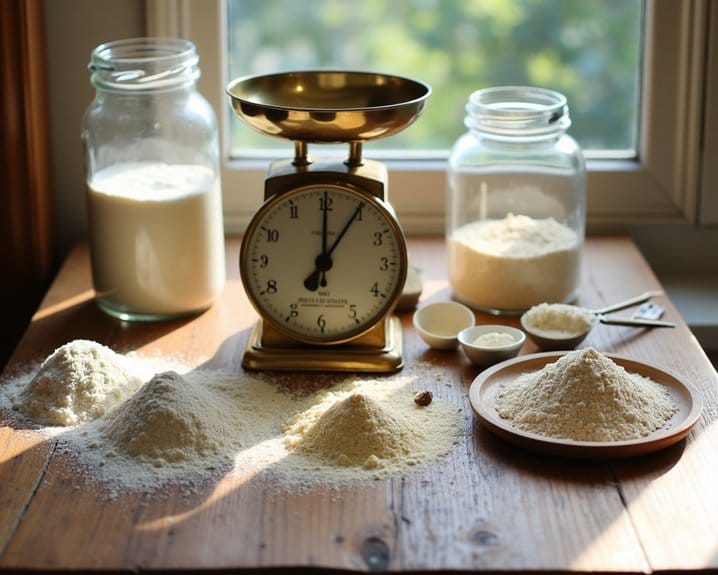
Accurate measurements can make or break your gluten-free baking success! When working with gluten-free flour substitutions, weight measurements are far more reliable than volume. You'll want to keep a kitchen scale handy for precise results.
Measuring gluten-free flours by weight rather than volume ensures consistent results. Keep a kitchen scale nearby for foolproof baking.
Here's what you need to know about measuring your gluten-free flours:
- 1 cup of gfJules Flour = 135 grams
- Always use separate measuring cups for dry and wet ingredients
- Spoon flour into measuring cups instead of scooping directly from the bag
- Level off with a straight edge for accuracy
Remember that different gluten-free flours have varying weights, which can affect your recipe's texture. For the best results in your baking, add an extra ½ – 1 teaspoon of baking powder to improve the rise and texture of your treats!
Recommended Products


Units: g, kg, lb, oz, lb: oz

Superior draft protection
Binding Agents and Texture Enhancers
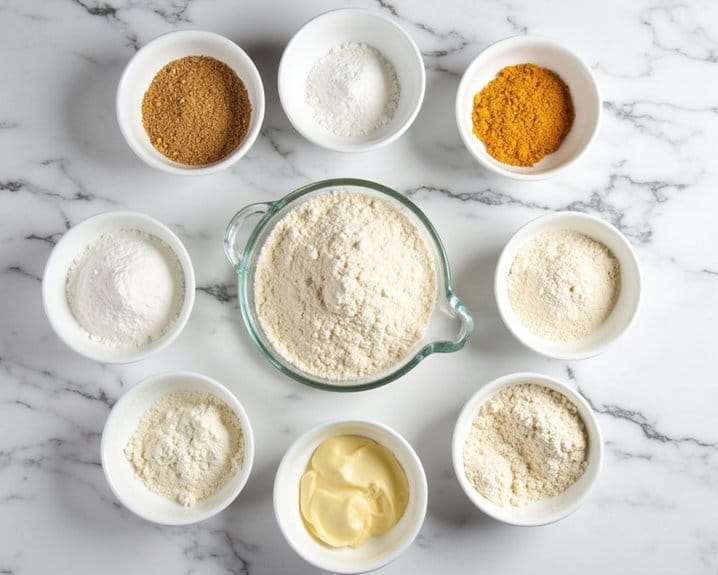
Since gluten-free baking lacks the natural binding properties of wheat flour, you'll need to add special ingredients to achieve that perfect texture! The key is using binding agents like xanthan gum – just add 1 teaspoon per cup of gluten-free flour to prevent your treats from crumbling.
To enhance moisture and texture, you can incorporate applesauce, yogurt, or an extra egg into your recipes. Don't forget about texture enhancers like potato starch, which adds that desirable chewiness to your baked goods!
For the perfect rise, you'll want to boost your leavening agents. If a recipe calls for 1 teaspoon of baking powder, try adding an extra ½ to 1 teaspoon. This simple adjustment helps create those light, fluffy results you're looking for in gluten-free baking.
Recommended Products

Premium Gluten-Free Ingredient: Judee's Gluten Free Xanthan Gum is a versatile component, enhancing textures in keto bread and keto pizza recipes. Its pure gum formulation meets stringent dietary needs, providing exceptional results
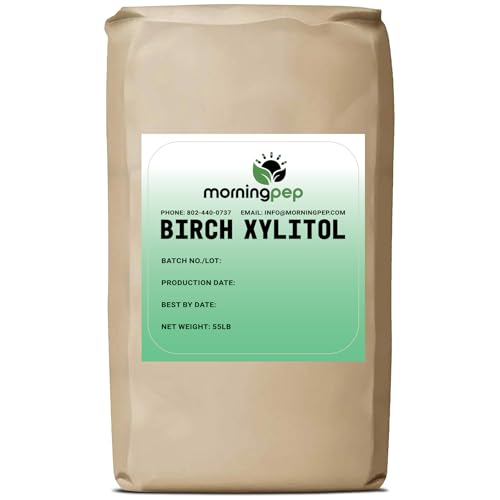
Morning Pep Xylitol is The Only Birch Xylitol Brand Made in USA
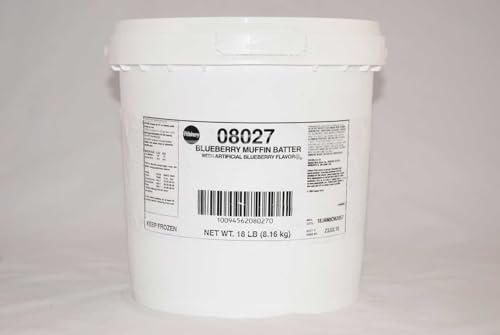
Frozen blueberry muffin batter
Moisture Content Adjustments
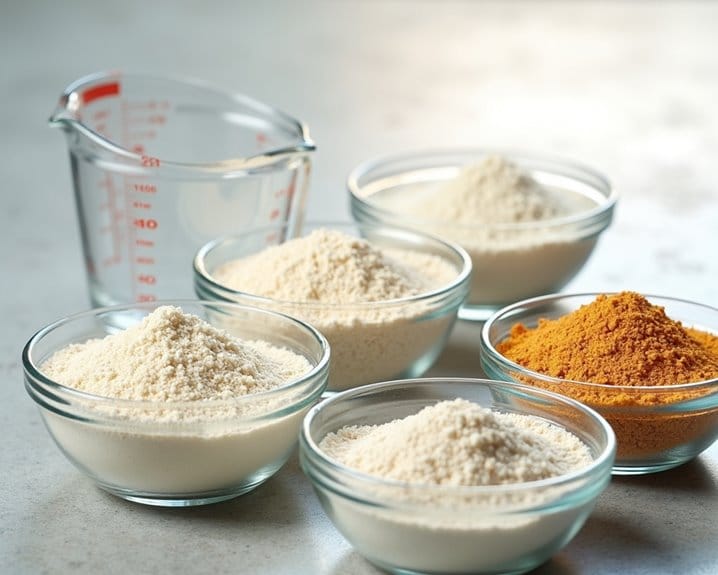
Now that you've mastered binding agents, let's tackle moisture content – it's a game-changer in gluten-free baking!
When working with gluten-free flours, you'll need to adjust your liquid content carefully. Coconut flour is highly absorbent, so you'll want to use just ¼ to ⅓ cup while increasing liquids and eggs to prevent dryness. Almond flour works differently – it adds moisture naturally but needs more fat for the right texture.
For ideal results with these moisture adjustments, you'll often need to combine them with binding agents like xanthan gum. Chickpea flour can be particularly tricky, as it's highly absorbent and requires extra liquid to avoid dense results. Remember, each recipe might need different tweaks – don't be afraid to experiment until you find the perfect balance!
Recommended Products

𝗕𝗨𝗟𝗞 𝗙𝗢𝗥𝗠𝗔𝗧 𝗙𝗢𝗥 𝗖𝗢𝗠𝗠𝗘𝗥𝗖𝗜𝗔𝗟 𝗨𝗦𝗘 𝗢𝗡𝗟𝗬: Ships in a 110 lb bag. Not intended for residential delivery. A commercial address with a forklift or liftgate is required for delivery.

Rich in dietary fibres that makes us feel full and thus helps in weight control

One, 25 pound bulk bag
Recipe Success Tips and Techniques
While mastering gluten-free baking takes practice, following a few key techniques will set you up for success! The most important recipe success tips start with precise measurements – always use the spoon and level method or a kitchen scale when measuring your flours and starches.
You'll want to combine multiple flours rather than trying to substitute one type, as this creates better structure and texture. Don't forget to add binding agents like xanthan gum or guar gum to provide that essential elasticity in your baked goods!
When working with specialty ingredients like coconut flour, remember to adjust the liquid content accordingly. For best results, stick to tested gluten-free recipes rather than attempting to convert traditional ones. This measure-for-measure approach will help guarantee your gluten-free baking turns out perfectly every time!
Recommended Products

Egg Cellent Protein Source: Each package contains the equivalent of 105 whole eggs. Mix 2 tablespoons of whole dried eggs with 2 1/2 tablespoons of water to recreate 1 fresh egg, perfect for a baking powder recipe.
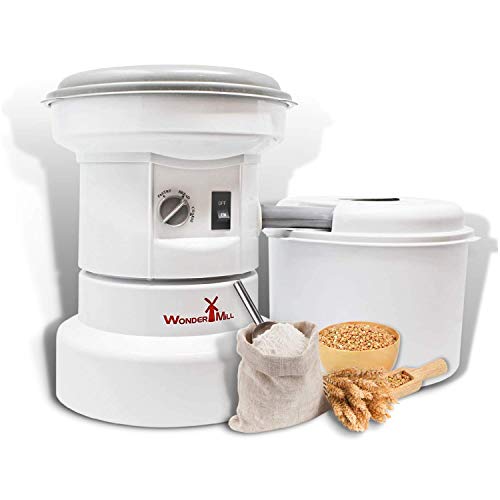
FASTER THAN THE COMPETITORS IN ITS PRICE RANGE - This electric grain mill grinder for flour is powered by a 1,250-watt LG grain mill motor that gives both capacity and longevity; an electric flour mill grinder that works faster than most electric grain mill grinder, wheat mills and corn grinder in the market. Powered by the standard 110v North American power outlet.
Frequently Asked Questions
What Gluten-Free Flour Can Replace All-Purpose Flour?
Where there's a will, there's a way! You'll find success using almond, coconut, oat, brown rice, buckwheat, tapioca, or sorghum flour. For best results, try commercial gluten-free flour blends with xanthan gum.
Can You Substitute Gluten-Free Flour in All Recipes?
You can't substitute gluten-free flour in all recipes without adjustments. Success depends on proper ingredient ratios, baking methods, and specific gluten alternatives. Some recipes, especially yeasted ones, require dedicated gluten-free formulations for best results.
How Do You Adjust Recipes for Gluten-Free Flour?
Don't worry about failed attempts! You'll need to increase liquids, add extra leavening agents, blend different flours, and adjust mixing time. Test small batches and monitor baking closely to perfect your gluten-free recipe conversions.
What Is the Most Versatile Gluten-Free Flour?
For your gluten-free baking needs, All-Purpose Gluten-Free Flour is most versatile. It's specially formulated with ideal flour blend ratios and binding agents to match regular flour's texture, making recipe testing easier and more reliable.