As an Amazon Associate, we earn from qualifying purchases. Some links on this site are affiliate links at no extra cost to you. Our recommendations are based on thorough research and editorial judgment.

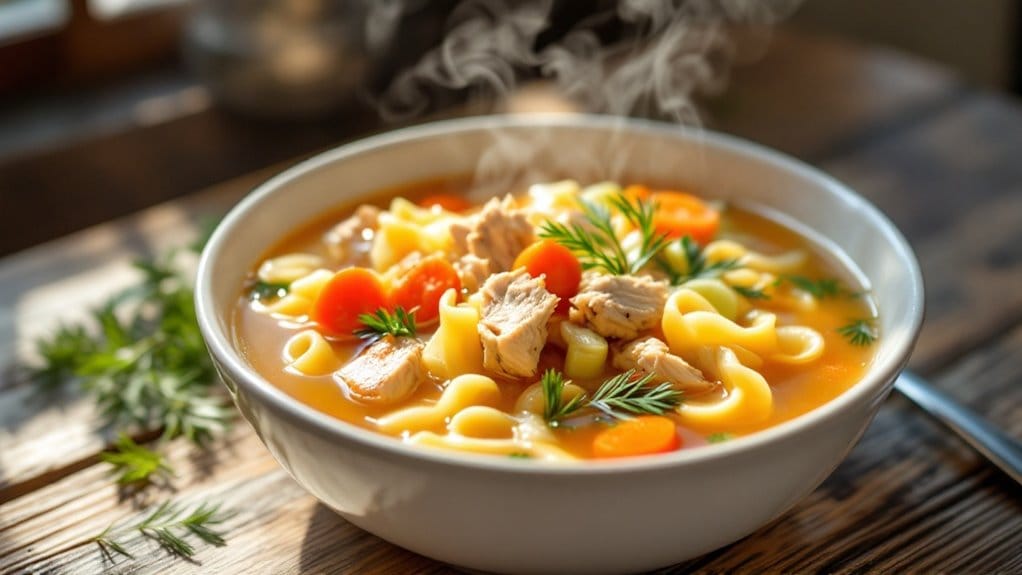
4 Best Chicken Soup Recipes That Will Warm Your Soul

You’ll love these four soul-warming chicken soup recipes that deliver pure comfort in every spoonful. Classic American-style features tender chicken, carrots, and egg noodles in a rich homemade broth that’s ready in 90 minutes. Try the quick Asian-inspired ginger chicken soup with mushrooms and bok choy, perfect for busy weeknights using your pressure cooker. The Greek avgolemono brings creamy, lemony goodness with rice and shredded chicken, while grandma’s Jewish matzo ball soup offers fluffy dumplings in a golden broth that cures whatever ails you. Each recipe packs its own magical combination of flavors and healing properties – let’s explore the heartwarming details.
Key Takeaways
- Classic chicken noodle soup combines tender chicken, egg noodles, and vegetables in a rich broth for traditional comfort.
- Asian-inspired ginger chicken soup features aromatic ginger, garlic, and bok choy for immune-boosting properties.
- Creamy chicken and wild rice soup delivers hearty warmth with its thick consistency and nutty grain texture.
- Greek avgolemono soup offers a unique twist with its lemony brightness and silky egg-based broth.
- These recipes can be prepared using various cooking methods, from quick pressure cooking to slow simmering for deeper flavors.
[content-egg-block template=offers_list hide=price,shop_info]
The Chicken Soup Manifesto: Recipes from around the world


Whether you’re a culinary explorer or simply looking to expand your soup repertoire, “The Chicken Soup Manifesto” offers an extensive collection of over 130 chicken soup recipes from across the globe. You’ll discover delightful dishes like Belgium’s creamy Waterzooi and Ethiopia’s aromatic Ye Misir Shorba Be Doro. Each recipe comes with fascinating historical background, making your cooking adventure both educational and delicious. The cookbook’s easy-to-follow instructions will help you master the art of soup-making in no time.
Key Features:
- Simple, real ingredients without processed foods
- Step-by-step instructions for making broths and stocks
- Versatile recipes you can mix and match
- Perfect for cozy winter meals and year-round comfort
While some readers wish there were more photos, you’ll find the recipes so well-written that you can create amazing soups even without visual guides. You’ll learn techniques that’ll transform you into a soup expert, ready to warm hearts and bellies with these magical international recipes.
Best For: Home cooks and food enthusiasts who want to explore global cuisine through the lens of chicken soup while learning new cooking techniques and cultural food histories.
Pros:
- Extensive collection of 130+ authentic chicken soup recipes from around the world
- Clear, easy-to-follow instructions with detailed background information on each recipe
- Focus on real, simple ingredients with instructions for making stocks and broths from scratch
Cons:
- Limited visual aids and photos to guide cooking process
- Some reported issues with book’s physical condition upon delivery
- May require sourcing specialty ingredients for certain international recipes
Fix-It and Forget-It Best Slow Cooker Chicken Recipes
For busy home cooks who love set-it-and-forget-it convenience, Fix-It and Forget-It’s slow cooker chicken recipes offer a practical collection of easy-to-follow meals. You’ll find everything from hearty soups and stews to delightful casseroles that practically cook themselves. The cookbook delivers a variety of healthy options that won’t break your daily routine or require complicated techniques. Best of all, you can toss the ingredients in your slow cooker and return to a magical aroma filling your kitchen.
While most readers praise the cookbook’s extensive selection, you’ll want to note a few considerations. The font size might be challenging for some to read, so keep your reading glasses handy. The recipes focus on convenience rather than budget-friendly ingredients, but the trade-off is worth it for the time you’ll save. These slow cooker wonders are perfect for those busy weeknights when you’d rather spend time with family than stand over the stove.
Best For: Home cooks seeking convenient, set-it-and-forget-it chicken recipes who value time-saving meal preparation and don’t mind spending a bit more on ingredients.
Pros:
- Extensive collection of easy-to-follow chicken recipes designed specifically for slow cookers
- Variety of options including soups, stews, and casseroles that require minimal hands-on preparation
- Clear instructions that make slow cooking accessible for both beginners and experienced cooks
Cons:
- Font size and text readability issues may be challenging for some readers
- Recipes aren’t focused on budget-friendly ingredients
- Limited to chicken-only recipes, which may not suit those seeking more diverse protein options
The Soup Book: Over 700 Recipes

Serious soup enthusiasts seeking historical perspective will find Louis P. De Gouy’s “The Soup Book: Over 700 Recipes” a fascinating journey through soup-making history. While the book boasts an impressive collection of over 800 recipes, you’ll want to note that chicken soup options are surprisingly limited, with fewer than 12 recipes in total. The recipe format might challenge you, as they’re written in long paragraphs without modern-style ingredient lists or step-by-step instructions.
What You’ll Find:
- A vast collection of seafood soups (about 75% of recipes)
- Historical recipes, including some medieval-era dishes
- Unique garnishing techniques for soups
- Various consommés and specialty soups
If you’re hoping to find easy chicken soup recipes, this 1949 cookbook might not be your best choice. Instead, it’s better suited for experienced cooks who want to explore traditional soup-making techniques or culinary historians interested in vintage recipes. You’ll discover interesting tips about soup-making, though you’ll need to adapt many recipes for modern kitchens and ingredients.
Best For: Experienced cooks, culinary historians, and serious soup enthusiasts interested in traditional and historical soup-making techniques.
Pros:
- Comprehensive collection of over 800 soup recipes spanning various historical periods
- Detailed information about traditional soup-making techniques and garnishes
- Unique and rare recipes that aren’t commonly found in modern cookbooks
Cons:
- Complex, paragraph-style recipes lacking clear ingredient lists and step-by-step instructions
- Limited selection of common soup varieties (like chicken and beef)
- Many recipes use outdated or hard-to-find ingredients that may need modern adaptation
Chicken Soup For The Soul Classic Dry Puppy Food (Chicken & Turkey Recipe)
Sale


Chicken Soup for the Soul Natural Premium Dry Puppy Food, Real Meat First Ingredient, No...
- GREAT TASTING: Our dog food contains high-quality protein with real chicken as #1 ingredient for GREAT taste and lean muscles
- MADE WITH REAL INGREDIENTS: Our 4.5 pound bag of puppy food is made with real chicken, turkey, flaxseed, whole grain brown rice, veggies, fruit and herbs
- NATURAL DOG FOOD: Our formula never contains by-product meals, artificial flavors or colors and is wheat free, corn free and soy free
Puppies need exceptional nutrition during their essential developmental stages, and Chicken Soup For The Soul Classic Dry Puppy Food delivers with real chicken and turkey as its top ingredients. You’ll find this recipe packed with wholesome ingredients like duck, salmon, brown rice, and fresh veggies that’ll make your pup’s tail wag. Think of it as a complete meal that’s been carefully “cooked up” to support your furry friend’s development, just like grandma’s chicken soup – but in kibble form!
The feeding portions are just as important as the ingredients, much like following a treasured family recipe. For a small pup weighing 5-10 pounds, you’ll want to serve 1½ to 2 cups daily during weeks 6-12, gradually adjusting the portions as they grow. Your puppy will love this nutritious blend that’s free from artificial ingredients, just like how you’d avoid processed ingredients in your own homemade soup. Best of all, each bag you buy helps feed shelter pets – now that’s a recipe for making a difference!
Best For: Growing puppies of all breeds who need premium nutrition with real meat proteins, especially those requiring grain-inclusive food that supports developmental needs.
Pros:
- High-quality protein from multiple real meat sources (chicken, turkey, duck, salmon) as primary ingredients
- Each purchase helps feed shelter pets through their Fill a Bowl Feed a Soul program
- Free from artificial ingredients, preservatives, and common allergens like corn, wheat, and soy
Cons:
- Higher daily feeding portions required compared to some other brands
- Only available in a 4.5-pound bag size, which may require frequent purchases
- Some puppies may need time to adjust to the food, potentially leading to increased water consumption initially
Factors to Consider When Choosing a Chicken Soup Recipe
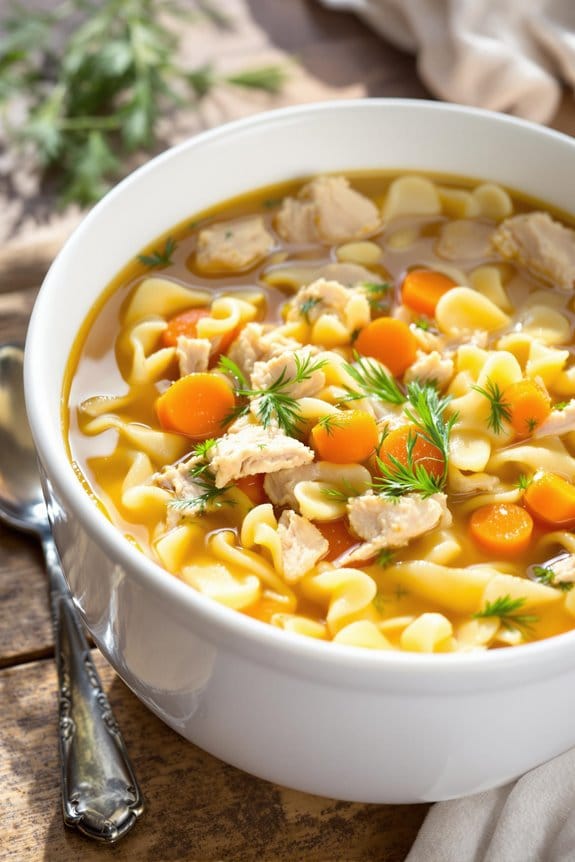
When you’re ready to make chicken soup, you’ll want to think about key factors that’ll help you pick the perfect recipe for your needs. You’ll need to reflect on your available cooking time, the quality of ingredients you can source, and whether you’re craving classic American-style chicken noodle or an exciting global variation like Thai tom kha gai. The foundation of any great chicken soup starts with your stock preparation technique and nutritional goals, which will guide your choices from basic ingredients to finishing touches.
Cooking Method and Time
Every cooking method brings distinct advantages to your chicken soup preparation, making it essential to choose the right approach for your needs. If you’re craving that magical homemade flavor but don’t have all day to cook, your stovetop can deliver delightful results in just 1-2 hours. You’ll get that classic simmering-pot-on-the-stove experience that’ll make your kitchen smell like grandma’s house during the holidays. Plus, you’ll have complete control over the cooking process, perfect for adjusting seasonings as you go.
Choose Your Method Based on Time:
- Stovetop (1-2 hours): Traditional method with hands-on control
- Slow Cooker (6-8 hours): Set it and forget it while you’re at work
- Pressure Cooker (30 minutes): Quick fix for busy weeknights
Remember that your chicken cut matters too! Bone-in pieces will need more time but add richer flavor, while boneless cuts cook faster. For the most flavorful results, you can’t beat homemade broth, but don’t worry if you need to use store-bought – your soup will still be delicious! Just pick the method that fits your schedule, and you’ll have a warm, comforting bowl of goodness in no time.
Ingredient Quality Standards
Superior ingredients form the foundation of any remarkable chicken soup, and selecting the right components can make the difference between a good recipe and an exceptional one. When you’re scanning recipes, look for those that call for fresh, whole ingredients rather than pre-packaged shortcuts. You’ll want to see mentions of farm-fresh chicken, crisp vegetables, and aromatic herbs that’ll make your kitchen smell like grandma’s during the holidays. The quality of your ingredients will shine through in every spoonful, so don’t skimp on the basics.
Key Quality Indicators to Look For:
- Fresh, never frozen chicken (preferably organic)
- Seasonal vegetables at their peak
- Fresh herbs instead of dried alternatives
- Homemade stock or high-quality broth
- Whole grains or legumes for added nutrition
Your recipe should specifically avoid processed ingredients and artificial enhancers that might compromise the soup’s wholesome nature. You’ll know you’ve found a winner when the recipe emphasizes natural flavors and simple, clean ingredients. Remember, the best chicken soup recipes are those that celebrate the pure, delightful taste of real food – just like those cozy bowls of comfort that make winter evenings magical.
Global Flavor Profiles
Building on the importance of quality ingredients, your choice of chicken soup recipe can transport you across continents through distinctive flavor combinations and cooking methods. When you’re ready to explore beyond traditional chicken noodle soup, you’ll find a world of exciting possibilities waiting in your kitchen. Different cultures have perfected their versions of this comfort food classic, each offering unique tastes that’ll make your taste buds dance.
Regional Variations to Try:
- Belgian Waterzooi: You’ll love this creamy, vegetable-packed version that transforms simple chicken soup into a hearty feast
- Taiwanese Ma You Ji Tang: Get ready for an aromatic adventure with sesame oil and ginger taking center stage
- Ethiopian Ye Misir Shorba Be Doro: Experience how lentils and warming spices create a bold, satisfying bowl
Each recipe tells its own cultural story through carefully chosen ingredients and time-honored techniques. You’ll discover that switching up your chicken soup routine isn’t just about trying new flavors – it’s about connecting with traditions from around the globe. Whether you’re craving something subtle or bold, there’s a chicken soup variation that’ll match your mood perfectly.
Stock Preparation Techniques
At the heart of any exceptional chicken soup lies a well-prepared stock, which serves as the foundation for your entire recipe. You’ll want to start with quality chicken or bones, as they’ll release their rich flavors during the simmering process. To create that magical depth of flavor you’re craving, you’ll need to commit to a slow cooking process of several hours. The patience will pay off when you taste the difference between homemade and store-bought stock!
Essential Steps for Perfect Stock:
- Place your chicken or bones in a large pot with enough cold water to cover
- Add your mirepoix (that’s fancy talk for chopped onions, carrots, and celery)
- Toss in your favorite herbs and bring to a gentle simmer
- Let it work its magic for 3-4 hours, skimming occasionally
Once you’ve created your liquid gold, strain it thoroughly through a fine-mesh sieve. You’ll be rewarded with a crystal-clear stock that’s perfect for any soup variation you can dream up. Don’t forget – you can freeze portions for those chilly nights when nothing but homemade chicken soup will do!
Nutritional Value Assessment
Now that you’ve mastered the art of stock preparation, let’s focus on maximizing your soup’s health benefits. When selecting a chicken soup recipe, you’ll want to prioritize lean chicken pieces that pack a protein punch without excess fat. Smart choices include skinless chicken breast or thigh meat, which create a delightfully hearty base for your soup. Your bowl of comfort should be as nutritious as it is delicious!
The magic happens when you combine protein with colorful vegetables and wholesome grains. Here’s what to look for in a balanced recipe:
- Fresh carrots, celery, and leafy greens for essential vitamins
- Whole grains like barley or brown rice for lasting energy
- Heart-healthy fats from a splash of olive oil
- Natural herbs and spices instead of excess salt
Don’t forget to check the sodium content in your broth – your heart will thank you! If you’re using store-bought stock, opt for low-sodium varieties and adjust the seasoning to taste. Remember, the best chicken soup recipes aren’t just about warming your soul; they’re about nourishing your body with every spoonful of that magical broth.
Recipe Difficulty Level
Selecting the right chicken soup recipe starts with understanding your cooking skill level. You’ll want to match your abilities with a recipe that won’t leave you feeling overwhelmed in the kitchen. Some recipes are perfect for beginners, while others might have you feeling like you’re auditioning for Top Chef! When you’re browsing recipes, look for ones that align with your comfort level in the kitchen.
Key Factors to Evaluate:
- Recipe format – Choose recipes with clear, easy-to-follow instructions that won’t leave you scratching your head
- Ingredient complexity – Look for recipes using familiar, readily available ingredients rather than hard-to-find items
- Cooking techniques – Check if the recipe requires advanced skills like making stock from scratch
- Time commitment – Reflect on whether you’re ready for a quick soup or a magical day-long simmering adventure
Serving Size Requirements
Beyond mastering cooking techniques, understanding serving sizes is a practical first step in choosing the right chicken soup recipe. You’ll want to know exactly how many bowls your pot will fill before you start chopping those carrots! Most recipes typically serve between 4 to 8 people, so you can plan accordingly for your cozy family dinner or festive holiday gathering. It’s always better to have a few extra servings than to leave hungry faces at your table.
Matching Your Needs:
- For intimate dinners (2-4 people), look for recipes using a single chicken breast
- For family meals (4-6 people), standard recipes using a whole chicken work perfectly
- For larger gatherings (6-8 people), select recipes that specifically mention “big batch” or “party size”
Remember that the complexity of your chosen recipe can affect how much you can realistically prepare. If you’re new to soup-making, start with a simple recipe that serves 4-6 people. You’ll also want to take into account your pot size and storage space – after all, those delightful leftovers need a home in your fridge! Pay attention to the nutritional information per serving, especially if you’re tracking calories or feeding guests with dietary restrictions.
Frequently Asked Questions
Can Chicken Soup Help Cure a Common Cold?
When you’re feeling under the weather, there’s nothing quite like a steaming bowl of chicken soup to lift your spirits! While it can’t magically cure your cold, chicken soup does provide real benefits. You’ll get anti-inflammatory properties from the chicken, hydration from the broth, and immune-boosting nutrients from the vegetables. Plus, the steam helps clear congestion, while the warm liquid soothes your sore throat. It’s nature’s comfort food working its scientific wonders!
How Long Can Homemade Chicken Soup Be Stored in the Refrigerator?
You can safely store your homemade chicken soup in the refrigerator for 3-4 days when properly cooled and stored in an airtight container. It’s essential to refrigerate your soup within two hours of cooking to prevent bacterial growth. For the best quality, you’ll want to enjoy it within the first couple of days. If you can’t finish it that quickly, don’t worry – you can freeze portions for up to 3 months.
Is It Necessary to Remove Chicken Skin Before Making Soup?
Like a cozy blanket on a winter’s day, chicken skin adds incredible flavor to your soup! You don’t need to remove it during cooking – it releases rich fats and collagen that make your broth silky and delicious. While you can skim off excess fat later, keeping the skin on helps create that magical golden color and deep flavor you’re craving. If you prefer a leaner soup, you can always remove the skin after cooking once it’s done its flavor-boosting job.
Can I Freeze Raw Chicken With Vegetables for Future Soup Making?
Yes, you can freeze raw chicken with vegetables, but it’s best to keep them separate! Here’s why:
- Raw chicken can release bacteria and juices during freezing that may contaminate your veggies
- Vegetables and chicken have different freezing times and textures
- You’ll get better results if you store them in separate freezer bags
Instead, freeze your chicken in one container and your prepped veggies in another. When you’re ready to make soup, you can combine them during cooking!
Should I Add Salt Before or After Cooking Chicken Soup?
While salt can transform a bland broth into liquid gold, it’s best to add it in two stages. You’ll want to lightly salt your chicken and vegetables at the beginning of cooking to help develop flavors, but don’t go overboard! Add most of your salt near the end of cooking, when you can properly taste-test the soup and adjust the seasoning. This two-step approach guarantees you won’t over-salt your soup by accident.